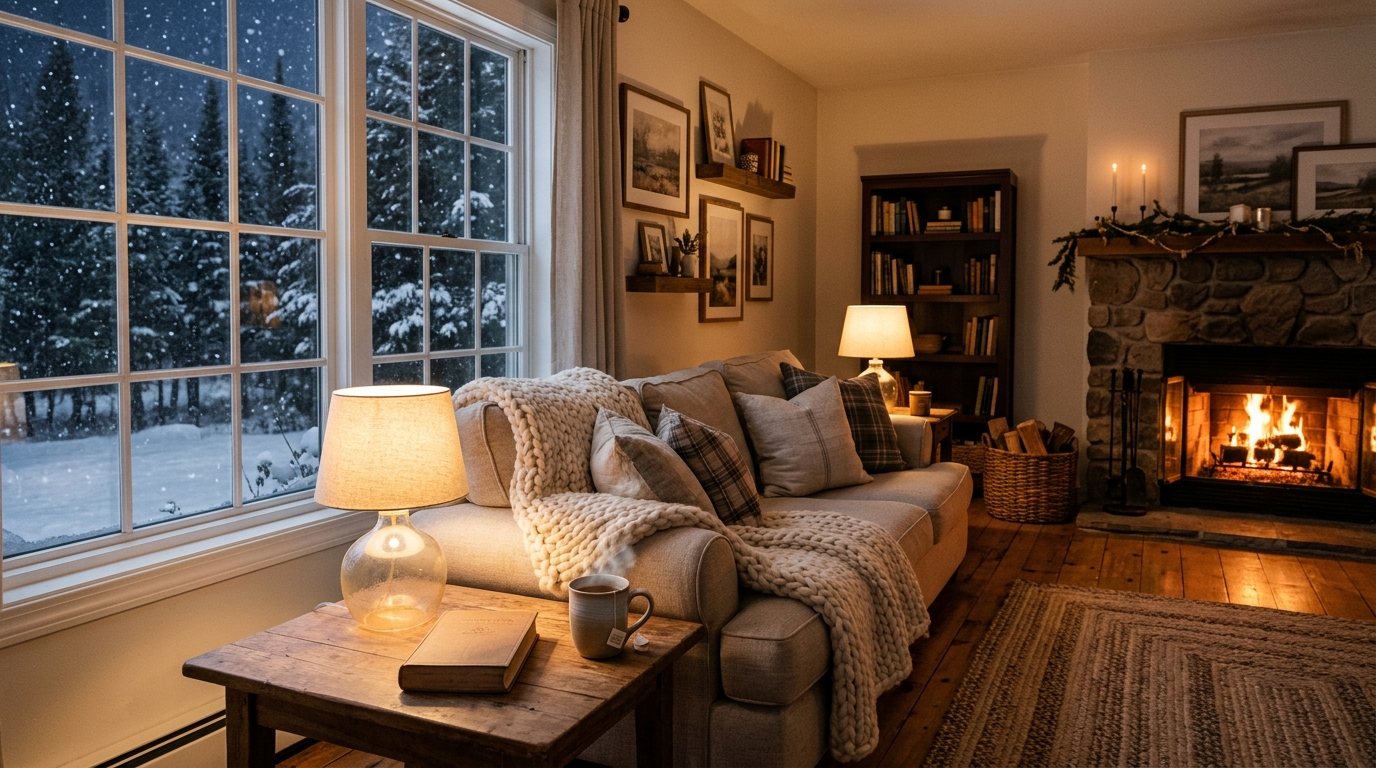
Calgary winters are cold, bright and very dry, and the heated air inside our homes can be hard on leather. This guide explains how to prevent leather from cracking, from keeping a sofa away from heat sources and watching indoor humidity to a simple conditioning schedule and quick fixes for early dryness. Browse our sofas, sectionals and recliners if you are comparing leather options.
Why Dry Winter Air Is Hard on Leather
Leather is a natural material that holds a little moisture and oil, and that is what keeps it soft and flexible. Cold outdoor air holds very little moisture, and when a furnace warms it up the indoor air becomes drier still. Leather slowly gives up its own moisture to that dry air, and the surface can turn stiff, dull and eventually split.
Cracking usually starts where leather bends or takes the most wear: the front edge of the seat, the arms, the headrest area of a recliner and the seams. Direct heat and strong sun speed the process, which is why a sofa beside a vent or window can age faster than one on a quiet wall.
Keep an Eye on Indoor Humidity
You cannot judge humidity by feel, but a small indoor hygrometer shows the reading in your living room. Many people aim for roughly 30 to 50 percent. In the coldest weather the lower end of that range is more practical, because high humidity can form condensation on cold windows.
- Run a humidifier in or near the room during the heating season, following its cleaning instructions.
- Place it a few feet away from the sofa so mist does not settle on the leather.
- Avoid pushing humidity too high. A steady middle reading is better than swings between very dry and damp.
Keep Leather Away From Heat and Sun
Heat pulls moisture out of leather quickly. A few simple adjustments make a visible difference over a winter:
- Keep leather at least 30 cm (12 inches) from baseboard heaters, radiators, vents and fireplaces, and farther if the room allows.
- Use a vent deflector to turn warm airflow away from the sofa if rearranging is not an option.
- Avoid placing a leather piece directly in front of a bright window. Blinds or sheer curtains soften the sun.
- Never dry damp leather near a heater. Let it air dry at room temperature.
A Simple Conditioning Schedule
Conditioner puts back some of the oils that leather loses. Many leather care guides suggest every three to six months, which works out to two to four times a year. Your sofa maker may recommend something different, so check the care information first. A schedule built around the heating season is easy to remember:
- Early fall: clean the leather and condition it before the furnace starts running daily.
- Mid-winter: check how the leather feels. If it looks dull or feels dry, add a light coat.
- Spring: clean and condition again to make up for the dry months.
Use a conditioner that suits your type of leather, test it on a hidden spot, and apply a thin, even coat with a soft cloth. Faux and bonded leather generally do not need conditioner. For the cleaning step that comes first, see our guide to cleaning a leather sofa.
Quick Fixes for Early Dryness
If the leather feels tight, looks dull or shows very fine lines, act before they turn into cracks:
- Vacuum with a soft brush attachment, then wipe with a barely damp cloth and let it dry.
- Test your conditioner on a hidden area.
- Apply a thin coat with a soft cloth, working in small sections.
- Let it absorb for the time on the label, then buff off the extra.
- Repeat in a few days if it still feels dry. Two thin coats beat one heavy one.
- Move the sofa away from heat and check your indoor humidity.
Skip the shortcuts. Kitchen oils and petroleum jelly can darken leather and leave it sticky, and a hair dryer only dries it out faster.
When Cracks Are Beyond Home Repair
Conditioner can soften leather that is dry, but it cannot close a split. See a leather repair specialist when you notice deep cracks, flaking, colour loss along the splits or a backing showing through. Peeling on bonded leather is a surface coating that has worn away, and no conditioner will bring it back. Before you apply any repair product, read the warranty and care information, since terms vary between makers.
Frequently Asked Questions
What humidity is best for a leather sofa?
Many people aim for roughly 30 to 50 percent relative humidity indoors. In very cold weather, the lower end of that range is often more practical, because higher humidity can form condensation on cold windows. A small hygrometer shows the actual reading in the room where the sofa sits.
Can I use olive oil or coconut oil on leather?
It is best not to. Kitchen oils can darken leather, leave it greasy or sticky and attract dirt, and some can turn rancid over time. Use a conditioner made for leather that suits your leather type, test it on a hidden spot first and follow the maker's care instructions.
Does a humidifier help leather furniture?
It can. Steadier indoor humidity slows moisture loss from the leather and is gentler on wood and other furnishings as well. Place the humidifier away from the sofa so mist does not settle on it, clean it as its instructions say, and avoid raising humidity until windows start to fog.
How close can a leather sofa be to a radiator or fireplace?
There is no single rule for every sofa, so check the maker's guidance. As a general guideline, keep leather at least 30 cm (12 inches) from heaters, vents and fireplaces, and farther if you can. Radiant heat from a fireplace or strong sun through glass can dry leather quickly.
Visit Our Calgary Showroom
Leather varies a lot from one piece to the next, and the grain and finish are easiest to judge by touch. Visit our showroom at Unit D200, 9737 Macleod Trail SW in Calgary, or read our comparison of leather vs fabric sofas if you are still weighing materials.


Comments
Loading comments...
Leave a comment
Your email address is never shown or shared. Comments are read by our team before they appear.