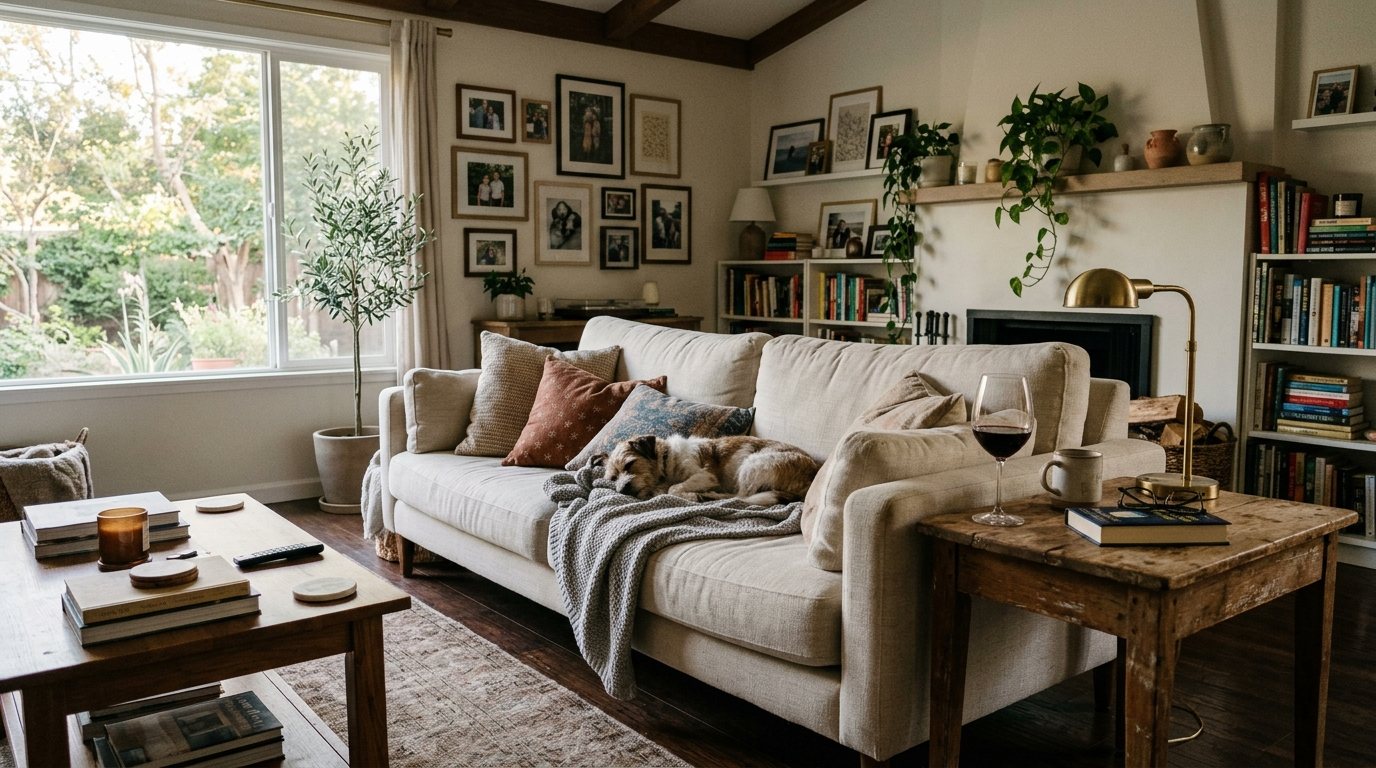
Pet hair finds its way into every cushion, and a smell can settle into a sofa long before you notice it. Most of it comes off with simple tools and a steady routine. This guide shows how to remove pet hair from a couch, how to deal with odours, and which fabrics and habits make life easier in a home with pets. If you are shopping, browse our sofas and sectionals with your pet in mind.
Why Pet Hair Clings to Upholstery
Fine hair works its way into the weave and holds on, especially where the fabric has loops, nubs or a deep pile. Static helps too, particularly in a dry Calgary winter. Smooth, tightly woven fabrics give hair less to grip, so it sits on the surface and brushes away.
That is why the best approach has two parts: loosen the hair first, then collect it. Vacuuming alone often leaves a layer behind.
Step by Step: Remove Pet Hair From a Couch
- Take off the loose items. Shake throws and removable covers outdoors, and wash them if the labels allow.
- Loosen the hair with a rubber glove. Slip on a clean rubber glove, dampen it slightly if the fabric allows moisture, and sweep your hand across the surface in one direction. The hair gathers into clumps. Keep the glove dry on delicate or X-coded fabric.
- Try a rubber squeegee. Drag a clean, dry, rubber-edged squeegee across smooth upholstery. It rolls the hair into lines you can lift away.
- Vacuum. Use the upholstery tool across the seat, back and arms, and the crevice tool along seams and under the cushions.
- Finish with a lint roller. It picks up the last fine strands and is quick to use between deeper cleans.
- Do the cushions on both sides, then check the frame underneath them, where hair collects.
Match the Tool to the Fabric
- Smooth woven fabric: a rubber glove, squeegee and lint roller all work well.
- Looped or bouclé fabric: use a soft brush attachment on low suction. A rubber tool can catch the loops.
- Velvet: brush gently along the direction of the pile and avoid anything rough.
- Leather and faux leather: wipe with a barely damp microfibre cloth. Hair does not cling, but claws can scratch, so keep them trimmed.
Removing Pet Odours
Odour sticks to hair, throws, cushions and the pet bed, so tackle all of them rather than just the sofa:
- Vacuum thoroughly first, because hair and dander hold smell.
- Wash throws, covers and the pet's own bedding according to their labels.
- Sprinkle baking soda lightly over dry fabric, leave it for several hours, then vacuum slowly until it is gone.
- Clean accidents quickly. Blot, then use the method that suits your cleaning code, and consider an enzyme cleaner made for pet messes if its label allows your fabric.
- Air the room by opening windows when the weather allows.
Check where your pet actually rests as well. A smell that seems to come from the sofa may be coming from a blanket tucked behind a cushion or a bed nearby. Scented sprays only cover a smell for a short time. If an odour keeps coming back, it may be inside the cushion filling, and a professional upholstery cleaner is the next step. Our guide to cleaning a fabric sofa covers the routine in more detail.
Fabrics That Shed Hair and Fabrics That Trap It
No fabric is completely hair-proof, but some are far more forgiving. As a general guide:
- Usually easier: smooth, tightly woven fabrics, leather and faux leather, and performance fabrics designed for easy cleaning
- Usually harder: loops, nubby weaves, chenille and deep pile, where hair tucks in and stays
Colour helps too. A shade close to your pet's coat hides stray hair between cleans. Our article on performance fabrics explains what those fabrics can and cannot do.
Habits That Keep Hair Under Control
- Brush your pet regularly, ideally outdoors, so less ends up on the sofa.
- Lay a washable throw over favourite spots and wash it weekly.
- Keep claws trimmed, and offer a scratching post for cats.
- Give your pet a comfortable bed of its own in the same room.
- Keep a lint roller or rubber glove within reach for quick touch-ups.
Washable throws are the easiest line of defence. Pick one that fits your pet's favourite spot, shake it out outdoors and launder it at the temperature on its label. Having two means one is always clean. If the sofa itself has removable covers, check the care label before washing, since many are dry-clean only.
Frequently Asked Questions
Does a rubber glove really remove pet hair from a couch?
Yes, it is one of the most effective home methods. The rubber grips loose hair and gathers it into clumps you can lift off. Use a dry glove on delicate or X-coded fabric, and a slightly damp one only where the fabric allows moisture. Follow with a vacuum to collect what is left.
How do I get a dog smell out of a sofa?
Wash the throws and covers that the labels allow, vacuum the whole sofa thoroughly, then leave baking soda on the fabric for several hours and vacuum it up. Air the room. Clean accidents promptly with a method that suits your cleaning code. A smell that keeps coming back may be inside the cushions.
What sofa fabric is best for pet hair?
Smooth, tightly woven fabrics release hair most easily, and leather or performance fabrics wipe down well. Looped, nubby or deep-pile textures tend to hold hair. No fabric is hair-proof, so pick a colour near your pet's coat, add a throw and check the care label for what you can safely clean it with.
How often should I vacuum a sofa if I have pets?
Two or three times a week suits many homes during heavy shedding, and weekly is often enough at other times. A quick pass with a lint roller or rubber glove between vacuums keeps hair from building up in the seams. Do it more often if your pet sleeps on the sofa.
Visit Our Pet-Friendly Calgary Showroom
Our showroom at Unit D200, 9737 Macleod Trail SW in Calgary is pet-friendly, so you can see how a fabric looks and feels with your companion beside you. If space is tight, browse our loveseats online for smaller seating that is just as easy to look after.



Comments
Loading comments...
Leave a comment
Your email address is never shown or shared. Comments are read by our team before they appear.