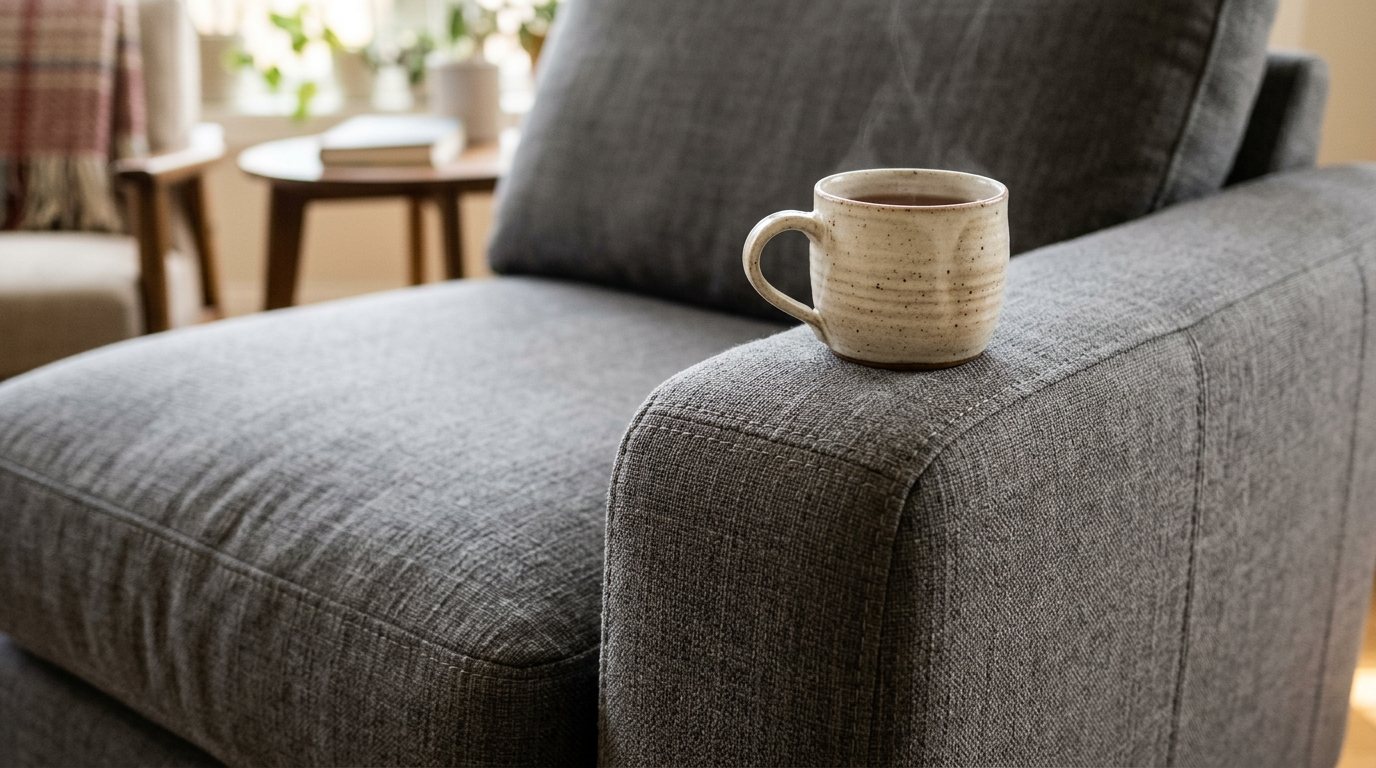
How long does furniture last? The honest answer is that it depends on construction, materials and how the piece is used, so any number is a rough guide and never a promise. This article gives cautious lifespan ranges for sofas, mattresses and tables, explains what drives them, lists the signs that a piece may be nearing the end, and shows how to get more years from what you already own. If a new sofa is on your list, the construction notes below will help you compare.
Rough Lifespan Ranges
The ranges below are common rules of thumb. Individual pieces can last well beyond them or fall short, and the manufacturer's own care and warranty information should always come first.
- Sofas: often cited at roughly 7 to 15 years. A well-built frame and good cushions sit at the upper end, while heavy daily family use sits at the lower end.
- Mattresses: commonly cited at around 7 to 10 years, but this varies by mattress type and maker. Check the care and warranty information for yours, and compare construction across our mattresses.
- Dining tables: a well-built wood table can last for decades, with the finish usually wearing before the structure does. Browse dining tables to compare materials.
- Dining chairs: chairs take far more stress than tables, so their joints tend to loosen sooner.
- Dressers and bed frames: sturdy frames with solid joinery can last many years, with drawer glides and hardware often wearing first.
What Drives How Long Furniture Lasts
Two sofas that look the same on a showroom floor can age very differently. These factors make the difference:
- The frame: a frame built from solid hardwood or quality plywood, with reinforced corners, generally holds up better than a thin, lightly joined one.
- Cushion fill: higher-density foam generally keeps its shape longer than low-density foam. Ask the maker about the fill and how it is wrapped or layered.
- The covering: tightly woven fabric and good-quality leather tend to resist wear. Abrasion ratings, where they are provided, give a rough comparison, but different tests are not directly comparable.
- How it is used: a sofa that seats a busy household every day will wear faster than one in a quiet guest room, and pets, children and direct sun add wear.
- Care: following the care label, cleaning spills promptly and avoiding direct heat all add years.
Signs It May Be Time to Replace
One sign on its own is not always a reason to replace a piece, since a worn cushion can often be swapped without replacing the sofa. Several signs together are a stronger signal:
- Seat cushions that stay flat or lumpy even after you fluff and rotate them
- A frame that creaks, wobbles or shifts when you sit, with joints that tightening cannot fix
- Broken springs or webbing, or a hard bar you can feel through the seat
- A covering worn through, peeling or too stained to restore
- A mattress with visible dips, lumps or a noticeable loss of comfort compared with when it was new
- Odours that remain after careful cleaning
Ways to Extend the Life of Your Furniture
- Rotate and fluff loose cushions regularly, and turn them where the design allows.
- Keep furniture out of strong direct sun and away from heat vents and radiators. Very dry winter air can stress wood and leather, so avoid placing pieces right beside a heat source.
- Use coasters, placemats and felt pads under legs to protect finishes and floors.
- Sit on seats rather than on arms, and avoid standing on chairs and tables.
- Tighten loose screws and bolts when you notice them, following the maker's instructions.
- Clean according to the care label, and test any cleaner on a hidden spot first.
- Use a mattress protector if the maker allows it, and follow the rotation advice in our guide to rotating and replacing your mattress.
Good habits start with a new piece. Our first week checklist for setting up new furniture covers the early steps that protect it.
Repair or Replace?
A useful rule is to repair when the structure is sound and the problem is cosmetic or easy to swap, and to replace when the structure itself is failing.
- Often worth repairing: reupholstery or new covers, replacement seat cushion inserts, re-gluing or tightening joints, refinishing a tabletop, and replacing drawer glides or hardware.
- Often worth replacing: a cracked or broken frame, joints that fail repeatedly, suspension that has collapsed across the seat, or a mattress that no longer feels comfortable.
If the quote for a repair approaches the cost of a comparable new piece, replacing may make more sense. A professional upholsterer or furniture repairer can tell you what is realistic.
Frequently Asked Questions
How long does a sofa last?
Many sofas last roughly 7 to 15 years, though the range is wide. Frame quality, cushion fill, the covering and daily use matter most. A well-cared-for sofa in a quiet room can outlast a family sofa used every day. Treat any figure as a guideline and check the maker's warranty information.
When should I replace a couch?
Consider replacing it when the frame creaks, wobbles or has broken, the seat support has failed, or the cushions stay flat after fluffing and the covering is worn through. If only the cushions or covering are tired, new inserts or reupholstery may be a better value than a whole new sofa.
How often should I replace a mattress?
Guidance often puts it at around 7 to 10 years, but it varies by mattress type and maker. Replace sooner if you see sagging or lumps, or if it no longer feels comfortable. Check the care and warranty information for your mattress, and follow any rotation advice from the maker.
Is it worth repairing old furniture?
It often is when the frame is sound and the problem is cosmetic, such as tired cushions, a worn covering or a scratched tabletop. If the structure is cracked, the joints keep failing or the repair cost comes close to a comparable new piece, replacing is usually the better choice.
See the Construction in Person
The best way to judge how a piece will last is to look closely at it. At the Rockwell Home showroom, 9737 Macleod Trail SW, Unit D200 in Calgary, you can sit on sofas, press on table tops, open drawers and ask about frames, fills and care before you decide.






Comments
Loading comments...
Leave a comment
Your email address is never shown or shared. Comments are read by our team before they appear.