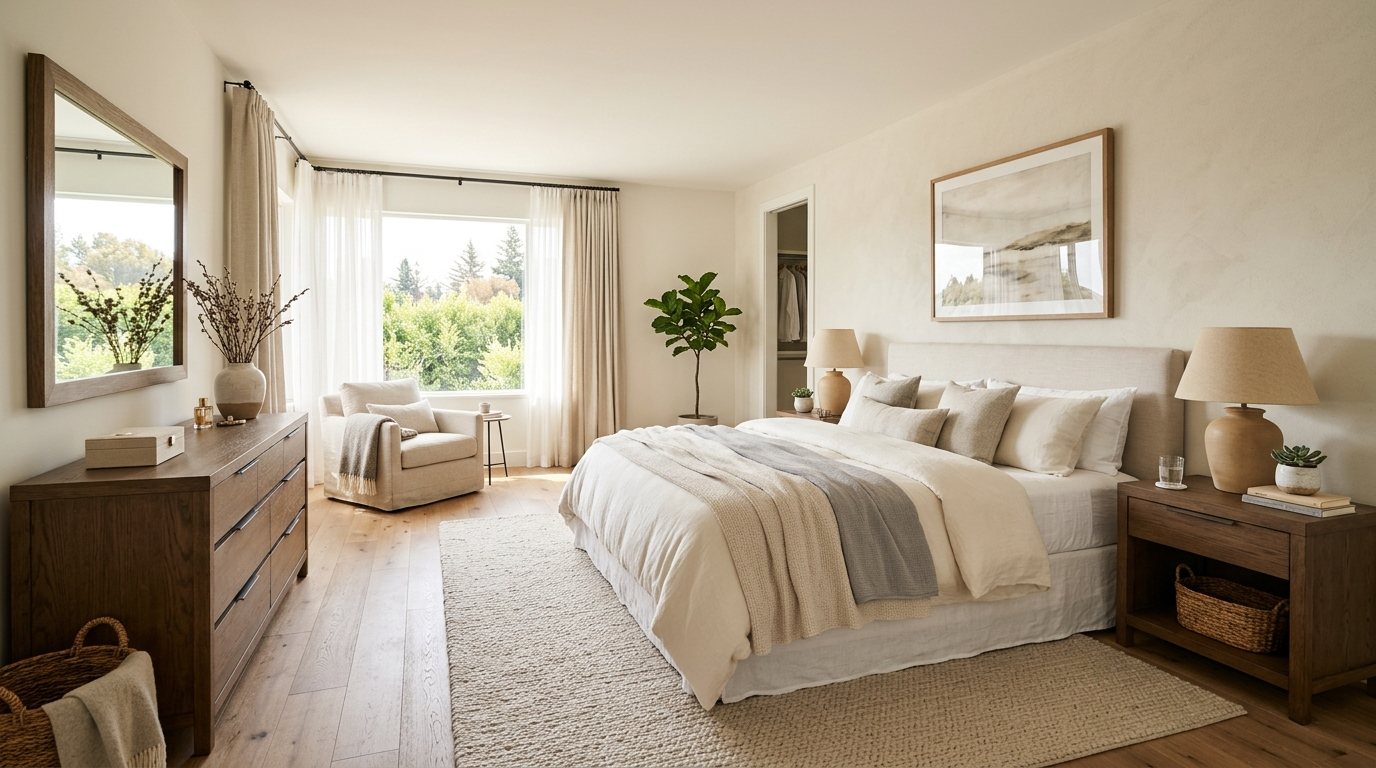
A bedroom set takes the guesswork out of matching, but only if it includes the pieces you need and fits the room. This guide shows you how to choose a bedroom set: what a set usually includes, how to measure, how much storage you need, when to mix finishes, and which quality details are worth checking. Start by browsing our bedroom sets to see the combinations on offer.
What a Bedroom Set Usually Includes
The contents vary from one collection to the next, so read the list of pieces carefully. Most sets are built around these items:
- The bed: a headboard, a footboard in some designs, and side rails. A queen bedroom set and a king bedroom set differ mainly in the bed size.
- A dresser: sometimes with a mirror that mounts on the back.
- Nightstands: some sets include one, others two.
- A chest: a taller, narrower storage piece that larger sets often add.
Mattresses are normally sold separately, so check whether slats or a support system come with the bed. If a piece you want is missing, ask whether it can be bought on its own.
Measure the Room Before You Choose
Mark windows, doors, closet openings, vents and outlets on a simple sketch, then tape the footprint of each piece on the floor. Good clearances to aim for:
- 24 to 36 inches (61 to 91 cm) beside and around the bed.
- At least 36 inches (91 cm) in front of the dresser, so a drawer can open fully and you can stand beside it.
- At least 36 inches between the foot of the bed and a dresser opposite it.
- Clear space for closet and bedroom doors to swing.
As a quick example, a queen bed with two 24-inch (61 cm) nightstands fills roughly 9 feet 6 inches of wall, so a room 10 feet wide leaves very little to spare beside it.
Bed size decides almost everything else, so settle it first. Our comparison of king vs queen beds includes the room sizes that suit each. Also check that a tall headboard will not block a window or outlet.
Work Out the Storage You Actually Need
Count what you fold rather than guessing: T-shirts, sweaters, jeans, sleepwear, socks and anything else that goes in drawers. If the closet is small, you will want more drawer space than if it has built-in shelves. Wide, shallow drawers suit small items, and deeper drawers hold bulky knits.
Then decide on the right mix. One wide dresser is a great fit for a wall with space to spare, while a dresser plus a chest uses height and works well when floor space is tight. Our guide to dresser vs chest of drawers compares the two in detail, and you can browse our dressers to see the sizes available.
Matching or Mixing Finishes
A fully matched set is the easiest way to get a coordinated room. It can feel formal or uniform, which some people love and others find flat. If you prefer a layered look, mix with a plan:
- Pick the bed as your anchor, then choose other pieces in the same wood tone family or with the same hardware colour.
- Limit the room to two or three finishes, and repeat each one at least twice so it looks intentional.
- Vary shape or height rather than colour, such as a tall chest beside a low dresser.
Hardware is the easiest part to change later. Knobs fit any single hole, but replacement pulls need to match the centre-to-centre spacing of the existing holes, so measure before you buy new ones.
Buying a Set or Building One Piece by Piece
A set is good value when you need most of the pieces. If you only need a bed and one dresser, buying individually leaves you with a better fit and less to store. Building gradually works well in small rooms or when your needs change. Start with the bed, then nightstands, then storage, and ask whether the collection can be added to later. Bring a photo of your wall colour and flooring when you compare finishes.
Quality Checks Before You Commit
- Drawer glides: pull each drawer fully out. It should move smoothly, stay level and stop firmly. Metal glides and soft-close features are a bonus.
- Joints: dovetail joints or well-fitted, glued and reinforced corners hold up better than simple staples.
- Drawer boxes and back panels: look for solid sides, a firm drawer bottom and a back panel that feels secure, not flimsy.
- Bed frame: push on the headboard and rails. There should be no wobble, and larger beds should have centre support.
- Finish and materials: check for even colour and smooth edges, and ask what each piece is made from, whether solid wood, veneer or engineered wood.
- Anti-tip hardware: anchor tall pieces to the wall with the supplied kit.
Frequently Asked Questions
What comes in a bedroom set?
Most sets include a bed, a dresser and one or two nightstands. Many add a mirror or a chest. The exact list differs by collection, so check the pieces included, the bed size, and whether slats or a mattress are part of the package.
Should all the pieces in a bedroom set match?
They do not have to. Matched pieces make the room look coordinated, while mixed pieces feel more personal. If you mix, keep the wood tone or hardware consistent, limit yourself to two or three finishes, and repeat each one at least twice.
How big a room do I need for a bedroom set?
As a guideline, a queen set with a dresser and two nightstands is comfortable in a room around 10 by 12 feet or larger, while a king set usually wants about 12 by 12 feet or more. Always tape out the footprints and check the clearances.
Is it better to buy a set or individual pieces?
A set suits you if you need most of the pieces and like the matching look. Individual pieces make more sense when you only need one or two items, or when you want to mix styles. Check how many pieces you will really use.
See the Pieces at Our Showroom
Photos hide how finishes, hardware and drawer action feel in real life. Visit our showroom at Unit D200, 9737 Macleod Trail SW in Calgary to compare bedroom pieces side by side, or look through the full bedroom collection online and bring your room sketch to plan the layout.


Comments
Loading comments...
Leave a comment
Your email address is never shown or shared. Comments are read by our team before they appear.