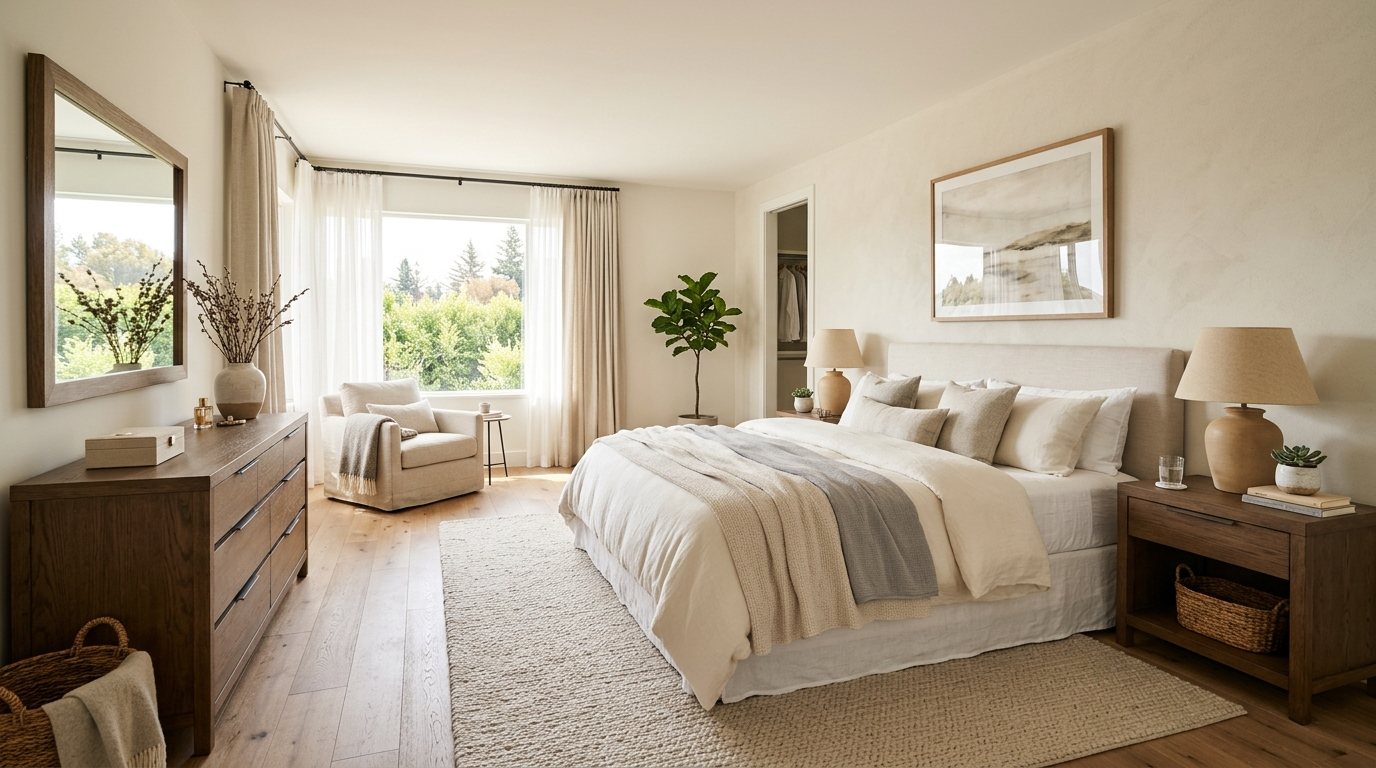
Choosing between a king vs queen bed comes down to three things: how much width you want to sleep on, how much floor your bedroom can spare, and whether the bed will make it through your doors. This guide gives you the exact dimensions, the clearances to plan for and a simple way to decide. Compare our queen beds and king beds as you read.
King and Queen Dimensions Side by Side
| Size | Mattress (width by length) | Width per sleeper |
|---|---|---|
| Queen | 60 by 80 inches (152 by 203 cm) | 30 inches (76 cm) |
| King | 76 by 80 inches (193 by 203 cm) | 38 inches (97 cm) |
| California king | 72 by 84 inches (183 by 213 cm) | 36 inches (91 cm) |
A king is 16 inches (41 cm) wider than a queen and the same length. Each person on a king gets the width of a twin bed, while a queen gives each person about 30 inches. A California king is narrower and 4 inches (10 cm) longer, which suits very tall sleepers in a narrower room.
The frame adds to these numbers. Plan on roughly 4 to 10 inches (10 to 25 cm) more than the mattress in each direction, and more for sleigh beds and storage styles. Our guide to bed frame sizes in Canada explains how frame styles change the footprint.
How Much Room Do You Need?
Use a simple formula: the frame width plus clearance on every side you will use. Leave at least 24 inches (61 cm) beside the bed, and 30 to 36 inches (76 to 91 cm) if you want to move around comfortably. Allow about 36 inches (91 cm) at the foot if that is a walkway.
- Queen example: a 66-inch frame plus 24 inches on each side needs a wall of about 114 inches, or 9 feet 6 inches.
- King example: an 82-inch frame plus 24 inches on each side needs about 130 inches, or 10 feet 10 inches.
As a guideline rather than a rule, a queen feels comfortable in a room around 10 by 10 feet (3 by 3 m) or larger, and a king usually wants about 12 by 12 feet (3.7 by 3.7 m) or larger. Door swings, closets and radiators can change the answer, so tape the bed outline on the floor and walk around it.
Couples, Solo Sleepers, Kids and Pets
- Solo sleepers: a queen is already generous. Choose a king only if you like to stretch out and the room is big enough to stay balanced.
- Couples: a queen works well, especially when you like to sleep close. A king gives each person twin-bed width, which many partners who move around appreciate.
- Kids and pets on the bed: a king gives everyone more room, though the larger footprint matters in smaller rooms.
- Guest rooms: a queen is the usual choice because it fits more room sizes and bedding is easy to find.
Both sizes are 80 inches (203 cm) long, which suits most adults. If you are very tall, compare the California king as well.
Nightstands, Dressers and Layout
Nightstands sit in that side clearance. A 20 to 24 inch (51 to 61 cm) nightstand takes most of a 24-inch gap, so if you also want to walk beside the bed, choose slimmer tables or a wider wall. Check the dresser too. You need roughly 36 inches (91 cm) in front of it to open a drawer and stand, and a king may push the dresser to a different wall.
If you are planning the whole room at once, our guide to choosing a bedroom set shows how the pieces work together.
Bedding and Delivery Access
King bedding is larger and often costs more than queen bedding, and queen sheets will not fit a king mattress. Measure what you already own before you decide, including duvet covers, blankets and any mattress protector.
Think about getting the bed in as well. Mattresses can flex slightly but should not be folded or forced, and king frames and headboards can be long or wide. Measure every doorway, hallway turn, stairwell and elevator on the route, plus the largest piece of the frame. Moving a mattress is a two-person job, so arrange help for the day.
A Simple Way to Decide
Choose a queen if:
- your bedroom is smaller than about 11 by 11 feet,
- you want space for nightstands and a dresser without crowding,
- access through doors and stairs is tight, or
- it is mainly for one person or a couple who sleep close.
Choose a king if:
- your room is roughly 12 by 12 feet or larger,
- you share the bed with a restless partner, a child or a pet, or
- you can clear 24 inches or more on both sides and still walk comfortably.
Frequently Asked Questions
How much bigger is a king bed than a queen?
A king mattress is 76 inches wide and a queen is 60 inches, so the king is 16 inches (41 cm) wider. Both are 80 inches long. Frames add a few inches to each, so the king needs about 16 inches more wall space.
What is the smallest room that fits a king bed?
As a guideline, a king is comfortable in a room around 12 by 12 feet. Smaller rooms can work if you leave at least 24 inches on each side and a clear path at the foot. Tape the bed outline on the floor to check before you buy.
Can I use queen sheets on a king bed?
No. A queen set is about 16 inches too narrow for a king mattress, so the fitted sheet will not stretch around it and the duvet will hang short at the sides. Buy king-size bedding, or measure your mattress and compare it with the package size.
Is a California king better than a king?
It depends on your height and your room. A California king is 4 inches longer and 4 inches narrower than a standard king, which suits taller sleepers and narrower rooms. Most bedding and many frames are made for the standard king, so check availability.
Compare the Sizes in Person
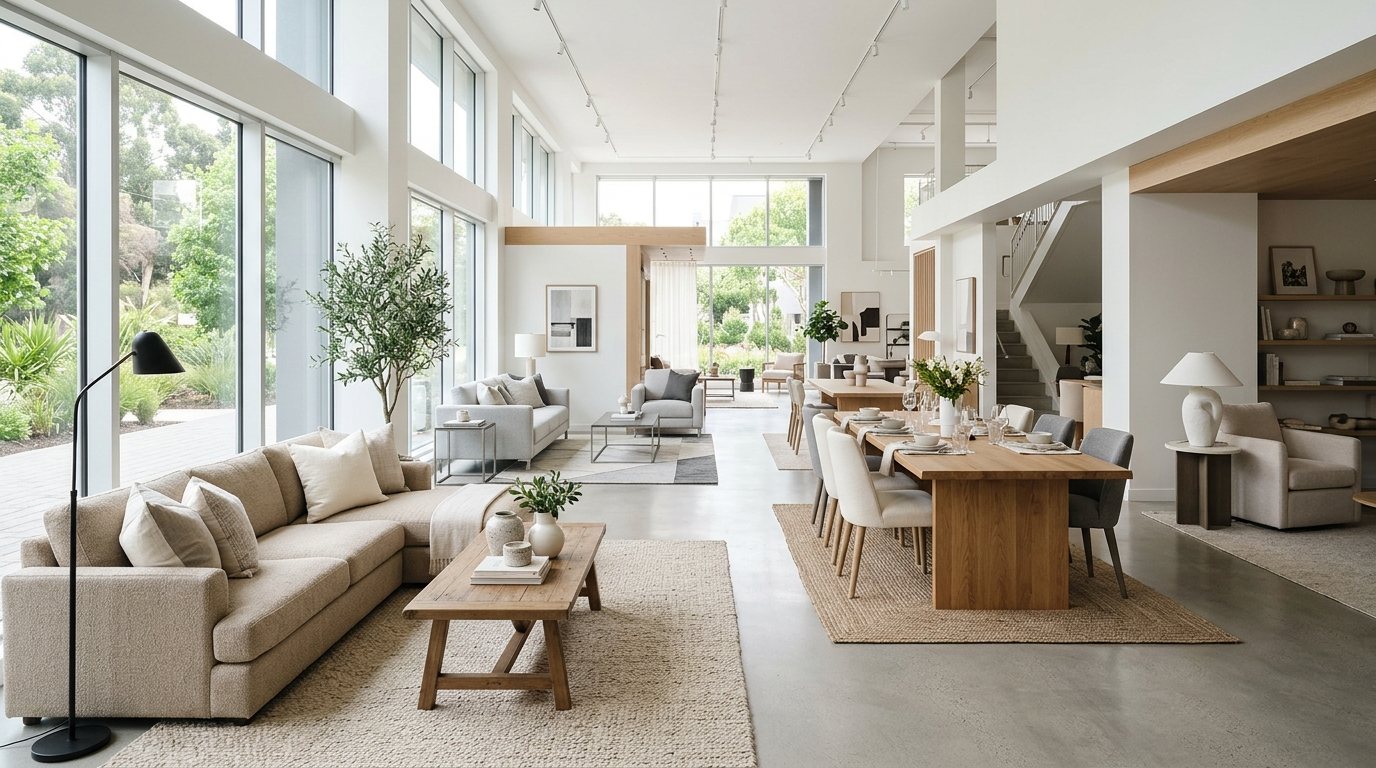
Standing next to a king and a queen frame tells you more than any chart. Come to our showroom at Unit D200, 9737 Macleod Trail SW in Calgary with your bedroom measurements, or look through all our beds online first to shortlist styles and sizes.



Comments
Loading comments...
Leave a comment
Your email address is never shown or shared. Comments are read by our team before they appear.