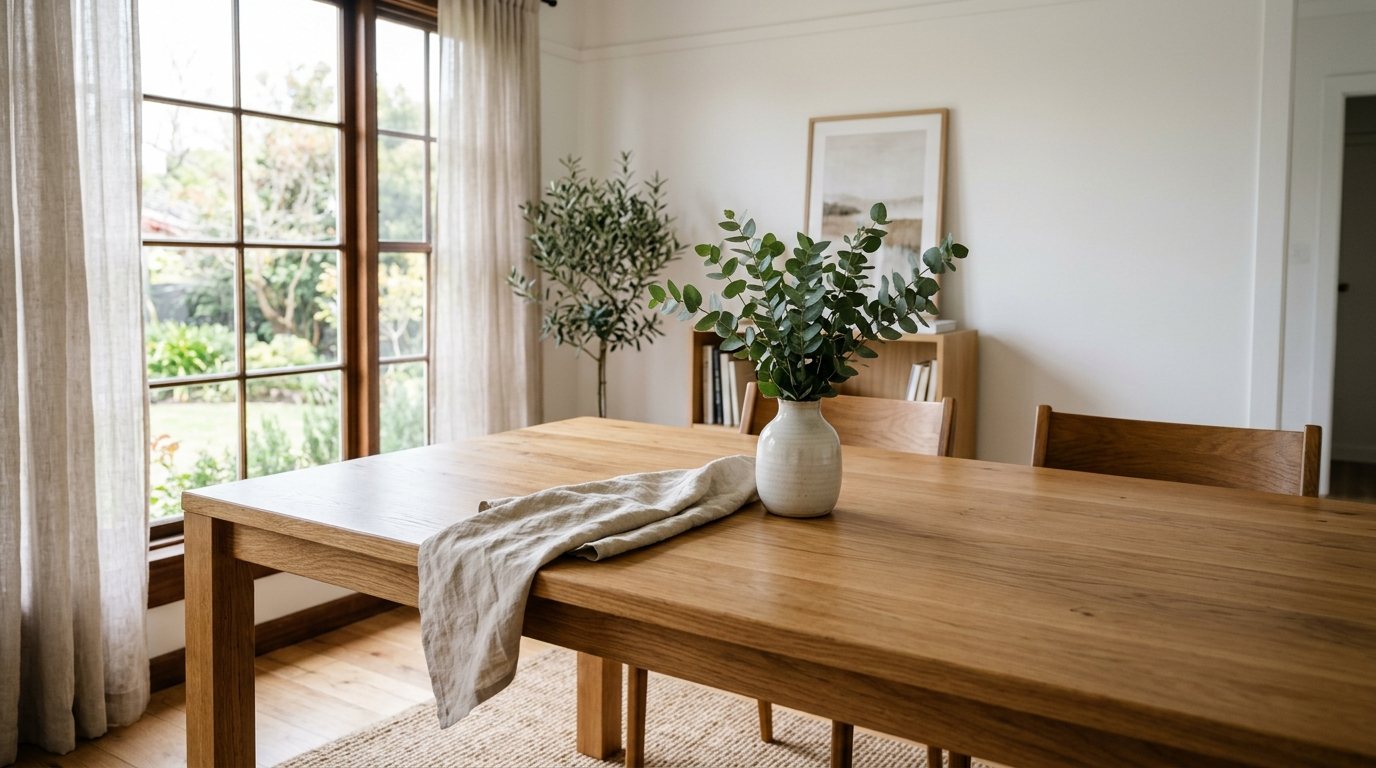
A dining table takes homework, hot dishes, holiday dinners and the odd craft project, so it needs a routine that is gentle and easy to keep up. This guide explains how to clean a wood dining table, how the type of finish changes the rules, and how to protect the surface from rings, heat marks and dry winter air. Browse our dining tables and dining sets to see finishes up close.
Know Your Table's Finish
The finish decides how much moisture and cleaning the surface can take. Check the care information from the maker first. If you cannot find it, assume the finish is delicate and keep cleaning gentle. These are the common types:
- Varnish, lacquer and polyurethane: a clear protective layer sits on top of the wood. It wipes clean with a lightly damp cloth but will not stand up to liquid left sitting.
- Oil or wax finishes: these soak into the wood and give a natural, softer look. They need gentle cleaning and occasional re-oiling or waxing with the product the maker recommends.
- Veneer: a thin layer of real wood bonded to a base. Water that reaches the edges or joints can make it lift, so wipe up moisture quickly.
- Laminate and wood-look surfaces: these tolerate a damp cloth and mild soap but dislike abrasive pads and direct heat.
Daily and Weekly Cleaning
- After meals, brush crumbs into your hand and wipe with a soft, dry or barely damp microfibre cloth, moving along the grain.
- Blot spills straight away. Standing liquid is the biggest threat to a wood surface.
- Once a week, stir a few drops of mild dish soap into a bowl of water. Wring a cloth until it is barely damp and wipe the top, then go over it with a cloth wrung out in plain water.
- Dry right away with a soft towel so no moisture lingers at the edges or joins.
- Dust the legs and rails too, where dust gathers unnoticed.
Polish, wax or oil only as often as the maker advises, and use a product made for your type of finish.
What to Avoid on Wood
Some products are far too harsh for a table that will be touched every day:
- Ammonia-based glass cleaners, bleach sprays and abrasive powders, which can dull or strip the finish
- Scouring pads and rough sponges, which scratch
- Soaked cloths and steam cleaners, which push moisture into joints and seams
- Heavy layers of spray polish, which can build up and leave a cloudy film
- Any cleaner you have not tested on a hidden spot, such as the underside of the top
Everyday Protection: Coasters, Placemats and Table Pads
Prevention is much easier than repair. A few habits protect the surface from most of the damage tables see:
- Put a coaster under every glass and mug, especially cold drinks that sweat.
- Use placemats or a runner for meals, and trivets under hot dishes, casseroles and slow cookers.
- Add a fitted table pad under a tablecloth for homework, crafts and big gatherings. Check that the backing is safe for your finish, because some rubbery or plastic backings can mark certain finishes over time.
- Put saucers under plant pots and felt pads under heavy bowls and decor.
- Place a pad under paper when writing, since pens leave impressions in softer finishes.
The chairs matter too. Felt glides on the feet protect the floor and the table legs, and our guide to choosing dining chairs covers comfort and height.
Water Rings and Heat Marks
White rings and cloudy patches usually mean moisture or heat has got into the finish. Fresh marks sometimes fade as the table dries, so wipe the spot dry and give it a day. For a mark that stays, rub very gently along the grain with a soft dry cloth, then try a wax or polish made for your finish to help it blend.
Avoid the home remedies you may find online, such as hot irons, hair dryers, toothpaste and mayonnaise. They can burn, dull or discolour a finish. Dark rings, black marks and scorch spots mean the damage has reached the wood, and a furniture refinisher or the maker is the right call.
Sunlight, Humidity and Calgary Winters
Wood swells and shrinks with the humidity in the room. In Calgary's heated, dry winters it can shrink slightly, which sometimes shows up as small gaps at joints. Keep the table away from vents and baseboard heaters, and aim for a steady indoor humidity of roughly 30 to 50 percent.
Direct sun fades and darkens wood unevenly, so use blinds or sheer curtains on bright days. If your table has an extension leaf, store it flat in a dry indoor room rather than a damp garage or basement, and use it now and then so it weathers in step with the top.
Frequently Asked Questions
Can I use furniture polish on my dining table?
It depends on the finish. Film finishes such as varnish need little beyond regular cleaning, and polish is optional. Oil and wax finishes usually call for the product the maker recommends. Read the care information, use polish sparingly and test a hidden spot, because layers of the wrong product can leave a cloudy build-up.
How do I get white rings off a wood table?
Wipe the area dry and try rubbing gently along the grain with a soft, dry cloth. A wax or polish made for your finish may help the mark blend in. Avoid irons, hair dryers and kitchen remedies, which can burn or dull the surface. Dark or deep rings usually need a furniture refinisher.
Is it safe to put hot dishes on a wood table?
Not directly. Even tough finishes can mark when a hot pot or casserole sits on them, and heat can soften some finishes. Use trivets, hot pads or a heat-safe table pad every time, even for a quick moment, and let very hot cookware cool a little before you set it down.
How often should I clean a wood dining table?
Wipe it after each meal, give it a fuller clean with a barely damp cloth and mild soap about once a week, and polish, wax or oil it only as often as the maker advises, which varies by finish. Blot spills immediately and dry the surface after any damp cleaning.
See Our Dining Tables in Person
A finish is easier to judge when you can see the grain and touch the surface, so visit our showroom at Unit D200, 9737 Macleod Trail SW in Calgary. If you are still deciding on a shape, our guide to round vs rectangular dining tables helps, and you can browse more tables online.




Comments
Loading comments...
Leave a comment
Your email address is never shown or shared. Comments are read by our team before they appear.