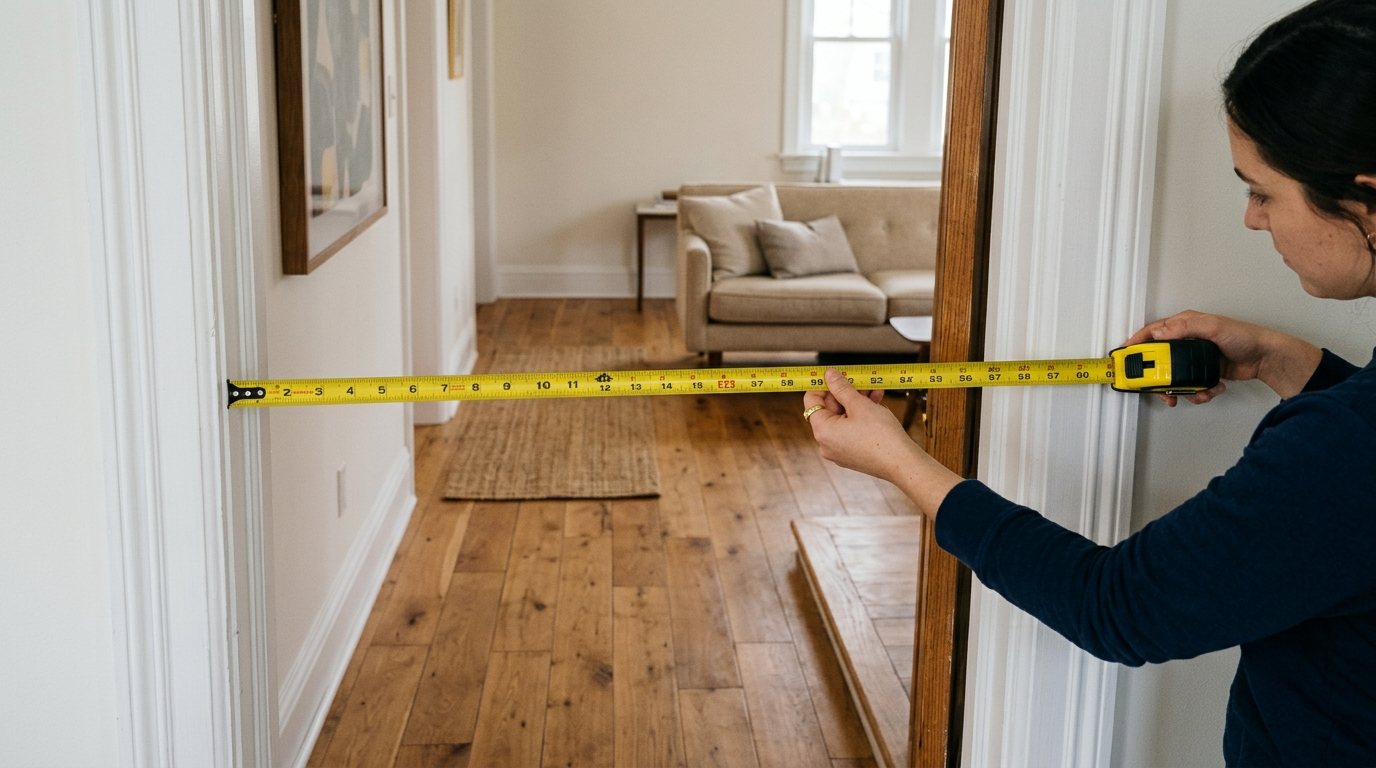
A sofa that looks perfect in the showroom is no use if it cannot get through your front door. This guide explains how to measure furniture for doorways, hallways, stairs and elevators, so you know a new piece will reach the room before you buy it. You only need a tape measure, a notepad and about twenty minutes. Start with the largest pieces you plan to buy, such as a sofa or a bed.
Start With the Furniture's Measurements
Every large piece has three key numbers: width (side to side), depth (front to back) and height. Find them on the product page and write them down. Width is taken at the widest point, which is usually the arms or the frame rather than the seat. Height includes the back cushions, and sometimes the legs.
Look for details that make a tight fit easier. Do the legs unscrew? Do the arms or back detach? Does a bed come as a headboard, footboard and rails? A piece that separates, or that is moved in sections, has a much easier journey than one solid block. If the product page does not say, ask before you order.
Measure Every Door and Opening on the Route
Trace the path from the first entry point (front door, garage or building lobby) to the room where the piece will sit. Then measure each opening along the way:
- Clear width: open the door as far as it goes and measure the gap between the open door and the opposite door stop. This is the usable width, and it is often narrower than the door itself.
- Height: measure from the floor or threshold to the top of the frame. Note low light fixtures and any bulkheads.
- Swing and side space: a door that opens against a wall may leave less room than you expect.
- Alternate entries: a patio door or garage entry is sometimes wider than the front door.
Write down the narrowest width and the lowest height on the whole route. Those two numbers decide most deliveries. Taking a door off its hinges can often add an inch or two (3 to 5 cm), but only do that if it can be rehung easily.
Hallways, Corners and Tight Turns
A hallway can be wide enough and still cause trouble at the corner. Long furniture has to swing around a turn while staying clear of both walls, so the tightest spot is usually where a hallway meets a doorway or another hallway. Measure the width on each side of every turn, and check what sticks out: baseboards, light switches, wall lights, picture frames and door handles.
Longer pieces need more turning room. A loveseat will turn a corner that a three-seat sofa will not, and a headboard or a tall bookcase has its own awkward angles. If your numbers are close, treat that as a warning rather than a pass.
Stairs, Landings and Ceiling Height
Stairs bring two problems: width and headroom. Measure the width of the stairway between the walls, or between the railings if they are closer. Then check the headroom at the lowest point, which is often where the ceiling slopes above the stairs or a landing turns. Furniture is carried at an angle, so a piece that clears the ceiling in a room may not clear the one above a stairwell.
Landings where the stairs turn are the hardest spots, because the piece has to pivot there. Measure the length and width of each landing. Spiral and winding stairs are usually not suitable for large pieces. In that case, choose a piece that arrives in smaller sections or talk to a professional mover before you buy.
Elevators in Condos and Apartments
If you live in a condo or apartment, measure the elevator door opening, then the inside width, depth and ceiling height. Ask your property manager whether the building has a larger service elevator, and whether you need to book it for deliveries. Many buildings have rules and time slots, and some keep the elevator measurements on file. Do not forget the lobby doors and the hallway corners between the elevator and your unit.
For techniques once you are on the move, see our guide to moving a sectional through doors, stairs and elevators.
Diagonal Depth, Paper Templates and Tape
Furniture rarely goes through a door the way it sits in a room. It is tipped on its end or side and turned. Some manufacturers list a diagonal depth, a measurement taken at an angle across the side profile of the piece, as a rough guide to how it behaves when tilted. Where it is listed, compare it with your narrowest opening, and be cautious if the two are within a couple of inches.
Because real furniture is not a simple box, the most reliable test is a template:
- Cut a sheet of cardboard to the piece's depth and height, which is its side profile.
- Hold it up in each doorway and tilt it to see how it passes.
- Use painter's tape to mark the piece's width and depth on the floor in the destination room, and tape a line on the wall for its height.
- Walk the route again with the template, checking each turn and landing.
Test the tape on a hidden patch of finished flooring first, and peel it off gently. Once the measurements work, our guide to preparing for furniture delivery day covers what to do next.
Frequently Asked Questions
How do I know if a sofa will fit through my door?
Compare the sofa's width, depth and height with the narrowest clear opening and the lowest ceiling on the route. Pieces are usually tilted, so depth and height matter as much as length. Check whether the legs or arms detach, and test with a cardboard template if the numbers are close.
How much space do I need to turn a sofa around a corner?
There is no single number, because it depends on the piece's length and shape and on the width of the hallway. Longer sofas need more room, and a loveseat turns far more easily. If your measurements are close, look for a piece that arrives in sections or ask a professional mover to assess the route.
What if my new furniture is too big for the doorway?
Check first whether the legs, arms or back can be removed, and whether a door can come off its hinges. A modular piece or a sectional that separates is easier than a single solid frame. In a condo, ask about the service elevator. If none of this works, choose a smaller piece.
Do I really need to measure the elevator in my condo?
Yes. Elevator openings and interiors vary a lot, and a large piece can be stopped there even if it clears every door. Measure the door opening, the interior width and depth, and the ceiling height, and ask your property manager about booking times and any larger service elevator.
Bring Your Measurements to Our Calgary Showroom
Numbers are easier to judge when the furniture is in front of you. Bring your measurements to our showroom at Unit D200, 9737 Macleod Trail SW in Calgary and compare them with real pieces, or browse our sectionals and beds online to see which ones come in sections.

Comments
Loading comments...
Leave a comment
Your email address is never shown or shared. Comments are read by our team before they appear.