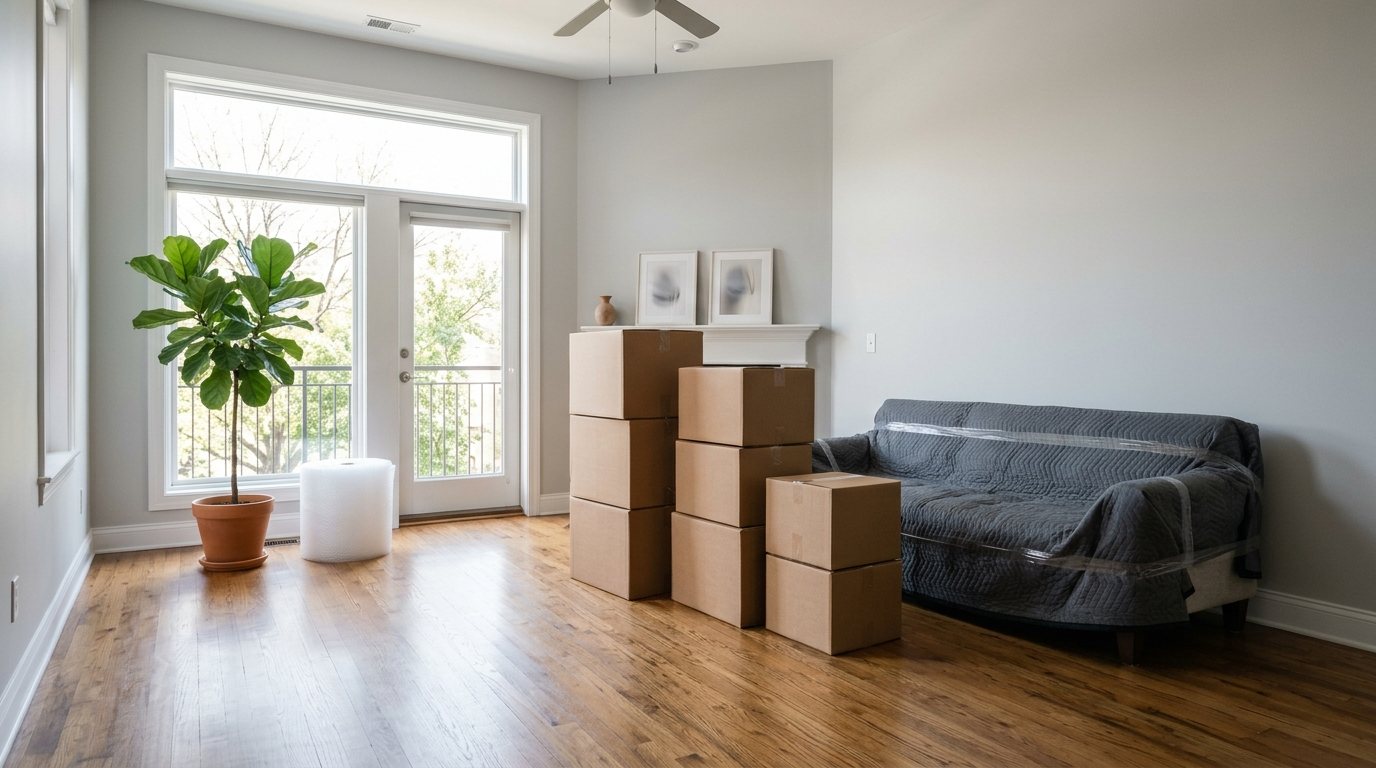
Moving furniture goes smoothly when you plan the route, protect each piece and know your limits. This guide shows how to move furniture safely, from measuring and prep to lifting, wrapping and loading, with room by room tips for the living room, bedroom and dining room. It also explains when to hire movers instead. Replacing pieces as you go? Browse our living room furniture for ideas.
Plan the Route and Gather Supplies
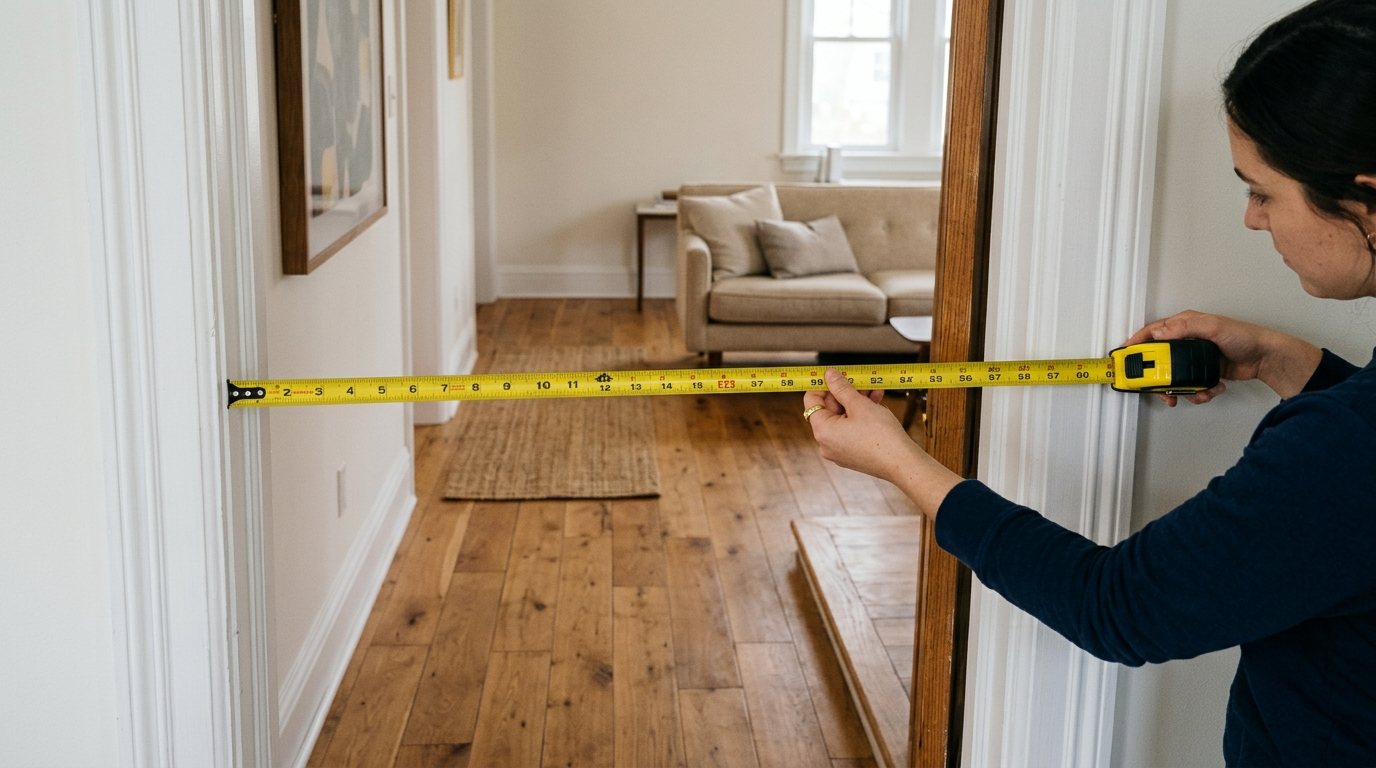
Many moving problems come from surprises: a hallway that turns out to be too narrow, a staircase with a tight corner, a door that will not open fully. Measure the biggest pieces (width, depth, height and diagonal), then measure every doorway, hallway, stair and elevator they must pass through. For a step-by-step method, read our guide to measuring doors, stairs and hallways before furniture goes anywhere near them.
Then walk the route from room to truck. Clear it of rugs, shoes and loose items, prop doors open, and book the elevator or loading area ahead of time if you live in a condo. Cover floors where needed, using the tips in our article on protecting your floors when moving furniture. Gather these supplies:
- Moving blankets and stretch wrap
- Furniture sliders and a hand truck
- A screwdriver, Allen keys and a wrench
- Zip bags, labels and a marker
- Work gloves and closed-toe shoes with a good grip
Prepare and Wrap Each Piece
- Empty it. Take everything out of drawers, cabinets and shelves. Remove the drawers from dressers so they can be carried separately.
- Take photos. A picture of how a piece goes together makes reassembly easy.
- Remove what comes off. Cushions, legs, glass tops, shelves and mirrors are lighter and safer on their own.
- Bag the hardware. Label each bag with the piece it belongs to and keep it with that piece or in one box that travels with you.
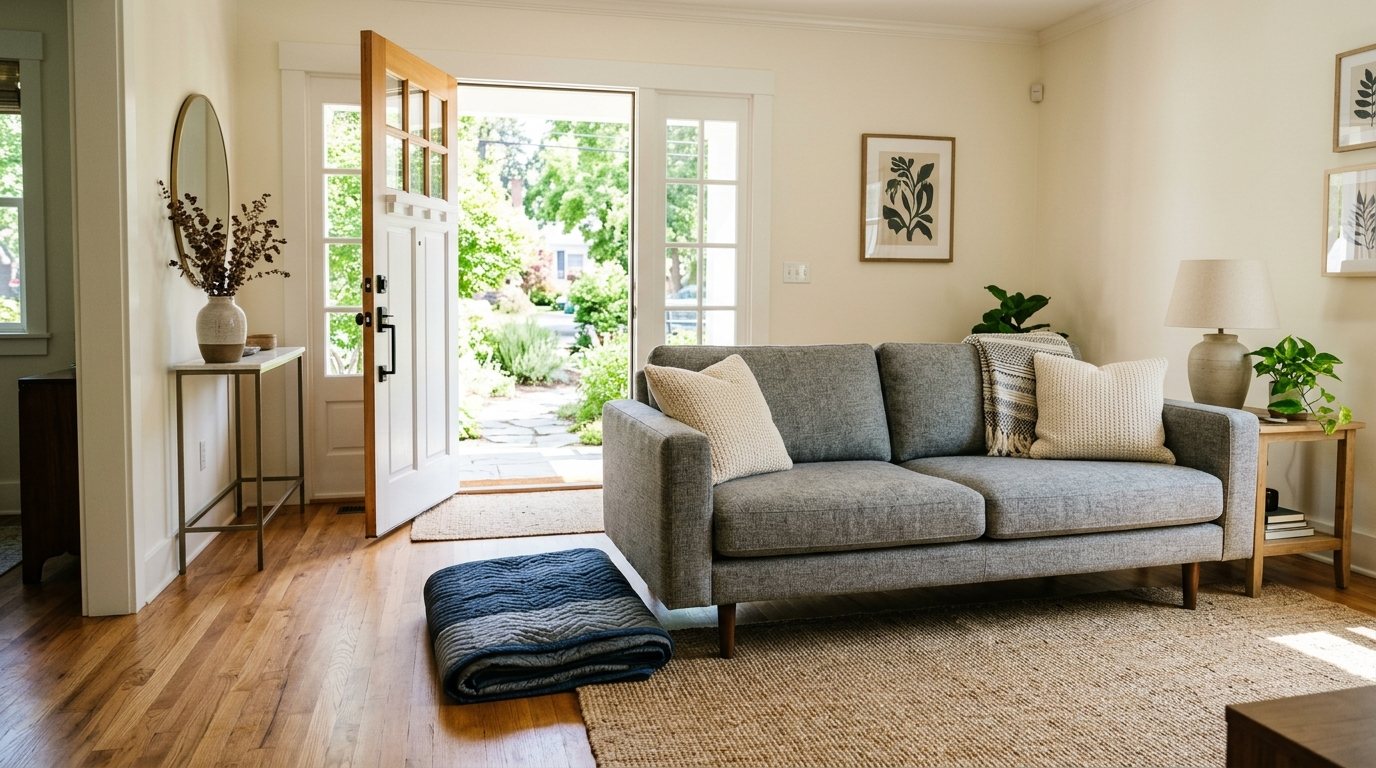
- Wrap in layers. Cover with a moving blanket first, then add stretch wrap on top to hold it in place. Plastic wrap directly against wood finishes or leather can leave marks, so keep the blanket in between.
Lift and Carry Safely
Good technique protects you as much as the furniture:
- Bend at the hips and knees, keep your back straight and let your legs do the lifting.
- Hold the piece close to your body and avoid twisting. Turn by moving your feet.
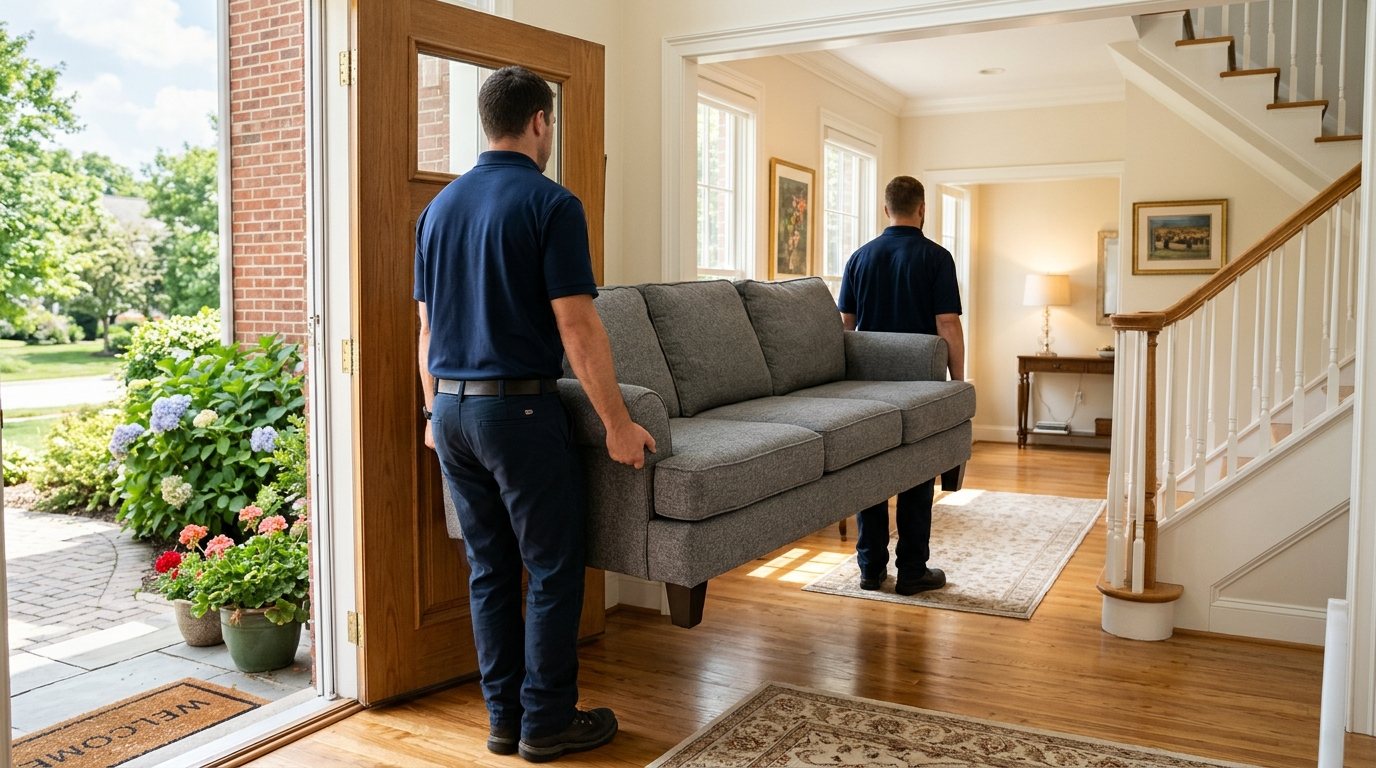
- Use two people for anything bulky or heavy, and agree on the route and who leads before you lift.
- Talk through every turn, step and doorway, and set the piece down if either person loses their grip.
- Lift by the frame, not by arms, legs or handles, which can come loose or break.
- Slide heavy items on hard floors with sliders instead of lifting, and take breaks.
Never try to carry a heavy piece alone.
Room by Room Tips
Living room
Take cushions off sofas and remove legs where the design allows. Tilt a sofa on its end to clear a door, keeping the frame supported. Sectionals usually separate into pieces, which are much easier to carry. Lift glass tabletops off coffee tables, and take electronics and glass doors out of TV stands before you move them.
Bedroom
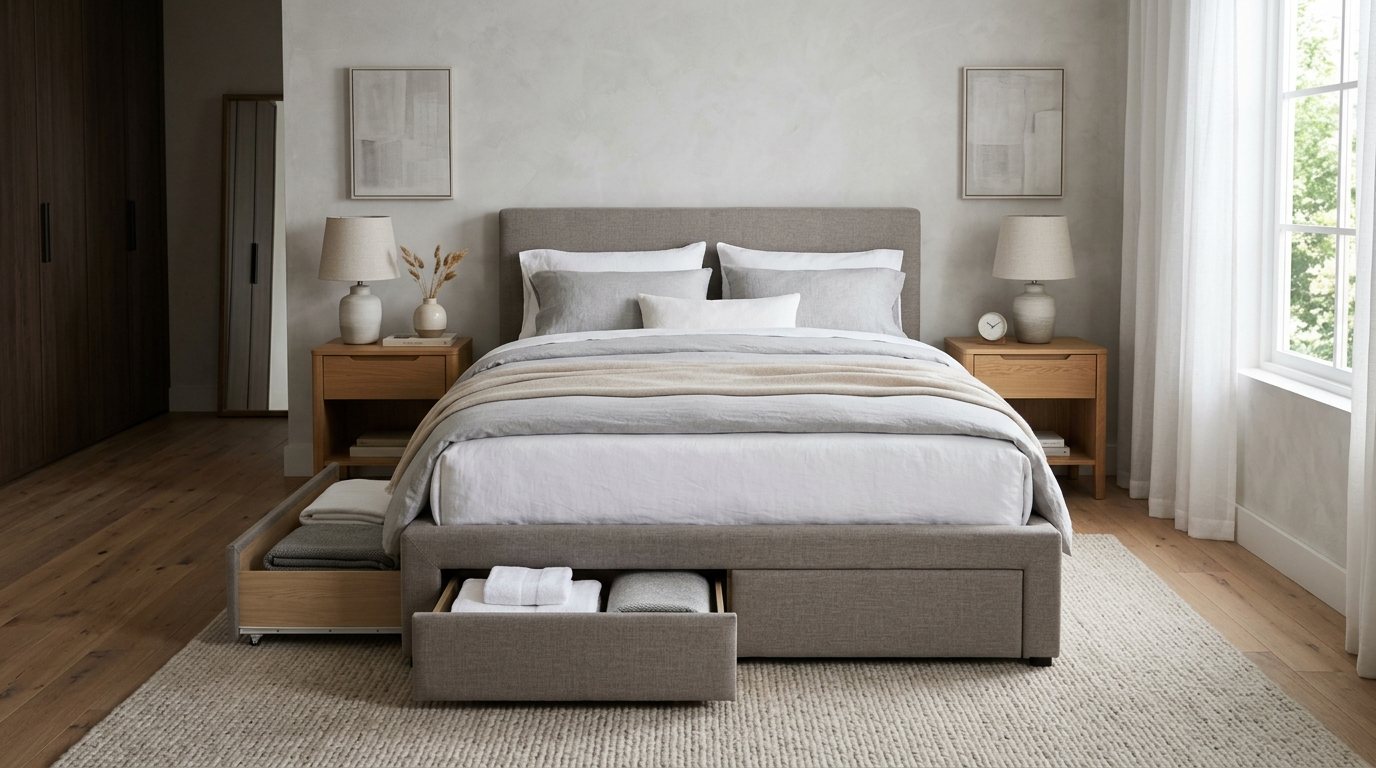
Take bed frames apart and keep the rails, slats and screws together. Carry a mattress flat or on its edge with two people, use a mattress bag, and never fold it. Pull the drawers from dressers and nightstands, carry the frames upright, and lift from underneath rather than by the top. Wrap mirrors and headboards in blankets and carry them upright on their long edge. See our bedroom furniture if a piece does not survive the move.
Dining room
Remove table leaves and, if the table is designed for it, the legs. Carry tabletops on edge with a blanket between any two surfaces. Hold chairs by the seat rail, not the back, and wrap upholstered seats. Take shelves and glass out of buffets and secure the doors with stretch film over a blanket. Browse our dining collection for replacements.
Loading and Unloading
Load the heaviest, flattest and sturdiest items first, standing mattresses and tabletops on their edges against a wall of the truck. Keep heavy items low and lighter ones on top, and strap everything so it cannot shift. Fill gaps with cushions or blankets. Do not stack anything on upholstered pieces or glass. When unloading, reverse the order and place each piece directly in its final room before you unpack the next.
When to Hire Movers
Hiring professionals is a good decision, not a failure. Consider it when:
- Pieces are very heavy, such as large reclining or sleeper sofas, stone tops or pianos
- Stairs are narrow, steep or winding, or there are several flights
- You do not have enough capable helpers
- Pieces are valuable, fragile or irreplaceable
- Lifting is a concern for you for any reason
Frequently Asked Questions
How do I move heavy furniture by myself?
Avoid lifting heavy pieces alone. Empty and disassemble the item first, then use furniture sliders on hard floors or a hand truck for short distances, and push rather than lift where you can. If a piece is too heavy to slide comfortably, or you need to use stairs, wait for a second person or hire movers.
Should I take furniture apart before moving it?
Usually yes, where the design allows. Removing legs, cushions, shelves and tabletops makes pieces lighter and easier to fit through doorways. Photograph the setup first, keep screws and fittings in a labelled bag, and follow any instructions from the maker. Do not force apart pieces that are glued or built as one unit.
How do I carry furniture up or down stairs?
Use two people, with the stronger person taking the lower end, and move one step at a time while calling out each move. Keep the piece close to your body, clear the stairs of loose items and pause on landings. Stop and ask a professional if the stairs are narrow, steep or winding.
How many people do I need to move a sofa?
Two people can usually carry a standard sofa a short distance, but longer carries or stairs call for a third person to guide. Sectionals separate into pieces, and reclining or sleeper models are heavier than they look. If you are unsure about the weight, ask the maker or retailer.
Planning New Pieces? Visit Our Showroom
If a move has you shopping for new furniture, measure your doors and stairs first, then visit our showroom at Unit D200, 9737 Macleod Trail SW in Calgary to see how pieces look and feel in person. Delivery details are on our terms and conditions page.

Comments
Loading comments...
Leave a comment
Your email address is never shown or shared. Comments are read by our team before they appear.