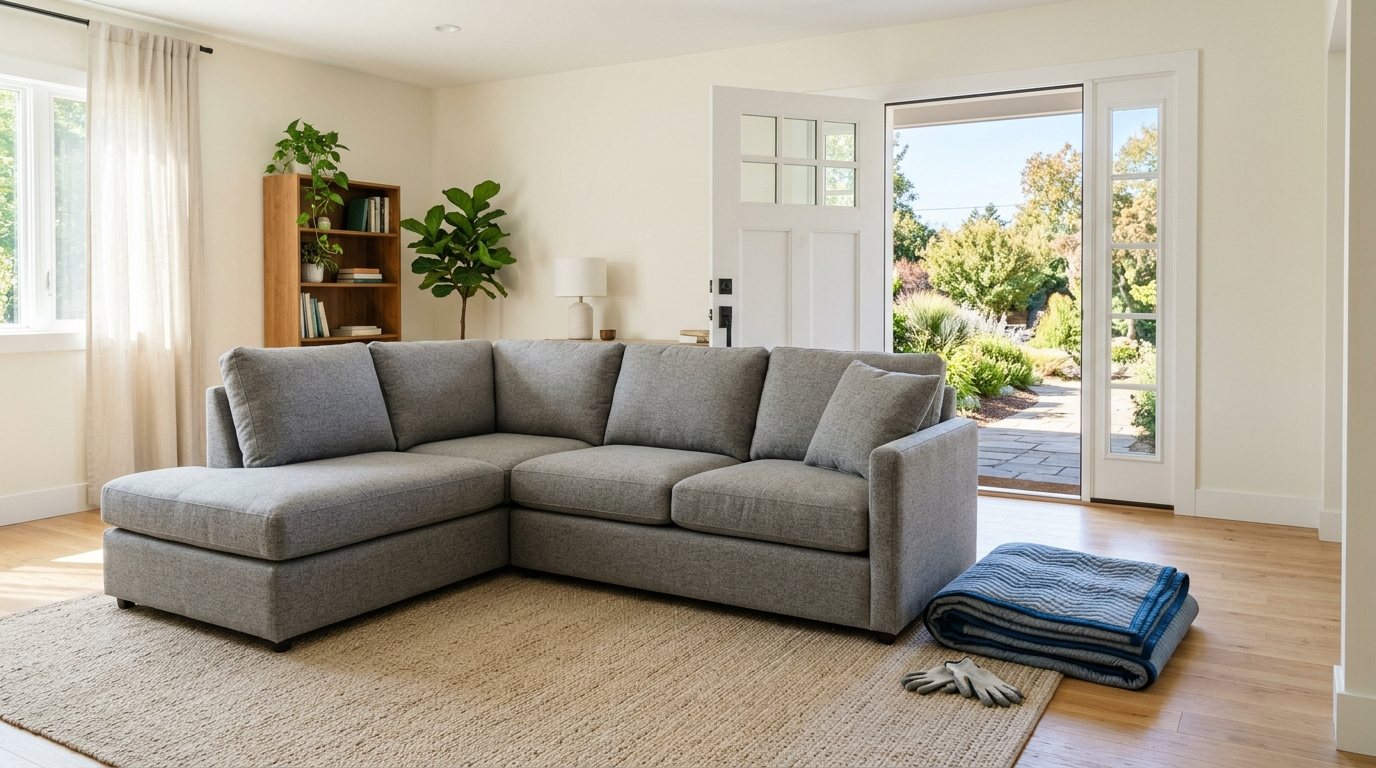
Heavy furniture and finished floors are a poor mix unless you plan ahead. This guide explains how to move furniture without scratching floors, using a few simple tools and good habits. It covers hardwood, laminate, vinyl and tile, along with sliders, blankets, rugs and the felt pads that protect your floors long after moving day. It helps when you are rearranging a living room or carrying in something new.
Know Your Floor Before You Move Anything
Different floors fail in different ways, so it helps to know what you are protecting:
- Hardwood and engineered wood: the finish scratches easily, and narrow legs can dent the surface under a heavy load.
- Laminate: the thin top layer can scratch or chip, and edges at the seams are the weak spots.
- Vinyl plank and sheet vinyl: softer surfaces that can dent, gouge or tear under sharp or concentrated weight.
- Tile: hard, but it can chip or crack if something heavy is dropped, and grout can be damaged by dragging.
- Carpet: dragging can snag or pull the pile and stretch the backing.
Check your flooring maker's care guidance for specific limits, and test any new product on a hidden patch first.
Sweep First, Then Check Under Every Leg
Most floor scratches come from grit, not from the furniture itself. A single piece of sand or gravel trapped under a leg works like sandpaper. Sweep or vacuum the entire route before you start, including doorways and entries where shoes drag dirt inside.
Then turn each piece over or tilt it and check the feet. Wipe away dust and debris, pull out any staples or nails, and replace worn or gritty pads. Look at the underside of tables and chairs for rough screws, exposed metal or cracked plastic glides that could cut into a finish.
Lift, Do Not Drag
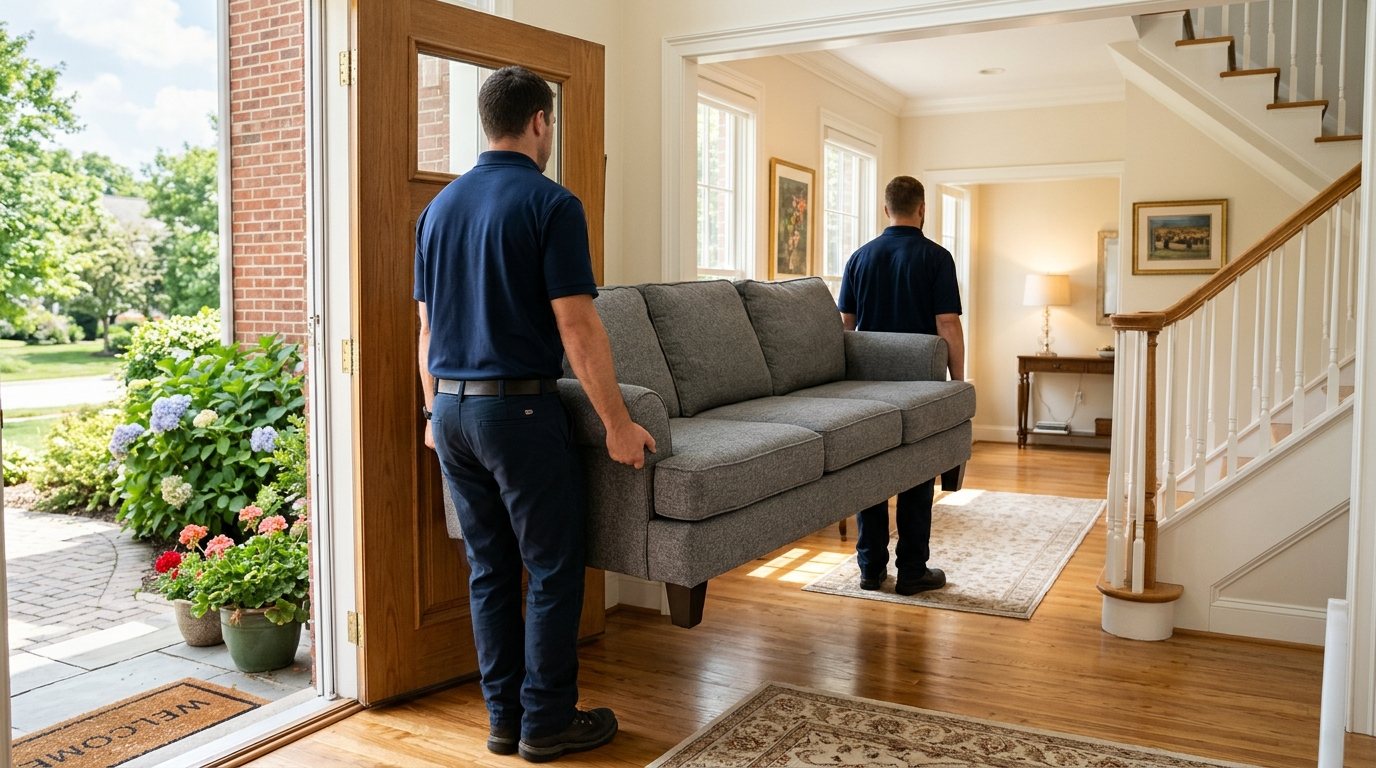
Dragging is the quickest way to scratch a floor. Even a short slide can leave a mark if a leg catches a rough spot. Lift each piece clear of the floor whenever you can, with a helper holding the opposite end.
Use safe lifting habits: bend your knees, keep your back straight, hold the sturdy frame instead of the legs and keep the load close to your body. If a piece is too heavy to carry comfortably, use sliders, or ask for help. Hiring a mover is sensible for very heavy items such as a solid wood dresser or a large sectional. Our guide to moving a sectional explains how to separate big pieces to make them lighter.
Sliders, Blankets and Floor Protection
When you must slide something, put a protective layer under it:
- Furniture sliders: tip one end up, slip a slider under each corner and push gently. Soft-faced sliders suit hard floors, and hard plastic ones suit carpet. Do not use them on wet floors.
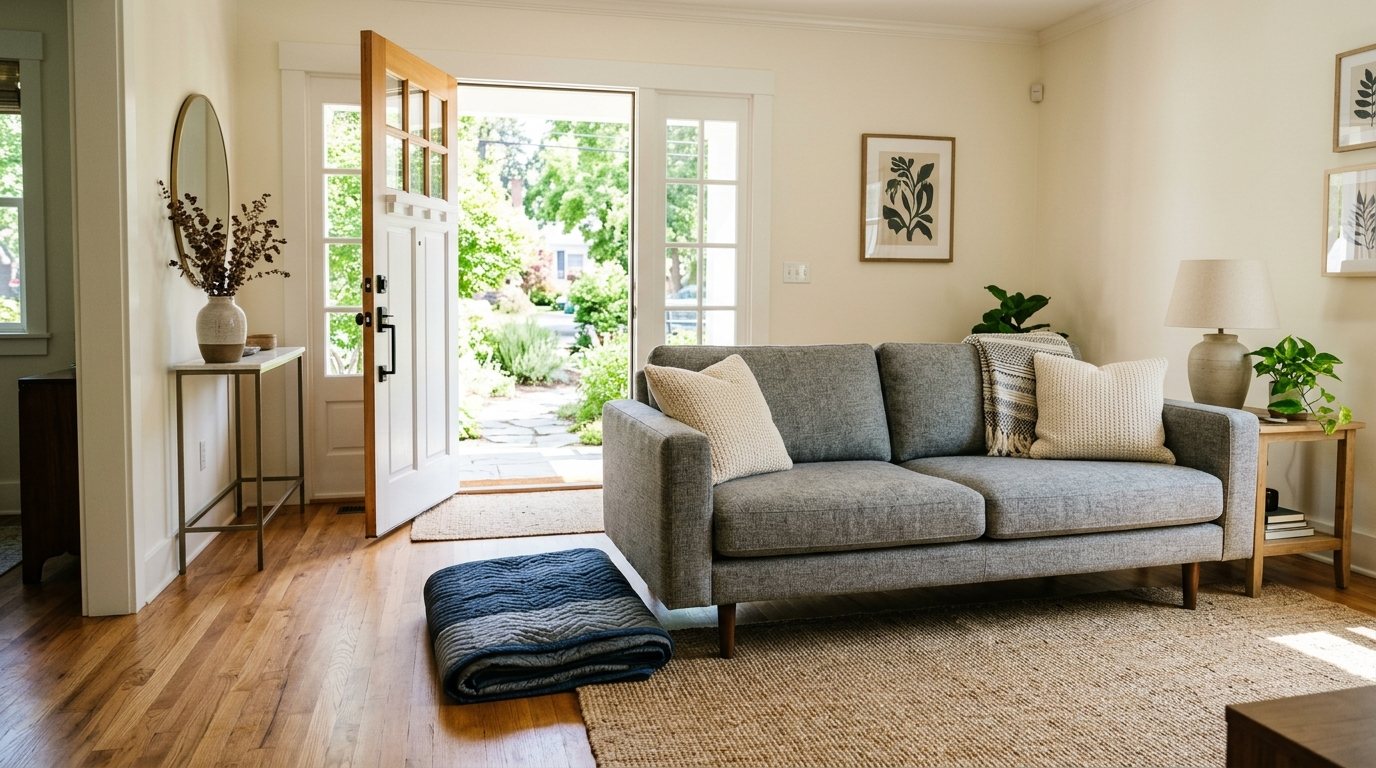
- Moving blankets: fold them and lay them as a runway, or wrap them around legs and corners.
- Hardboard or plywood panels: lay these along high-traffic routes to spread weight and block grit. Make sure the underside is clean.
- Cardboard or protective paper: useful as a simple runner, but replace it if it gets dirty or wet.
- Painter's tape: use low-tack tape to hold panel edges, and test it on a hidden spot first so it does not lift the finish.
Wheels, Casters and Hand Trucks
Wheels can mark floors, too. Hard plastic casters and the narrow wheels on hand trucks leave scuffs and dents, especially on softer surfaces. Lay plywood or hardboard along the path before you wheel anything across a finished floor, and roll rather than drag.
For items that stay on casters, such as office chairs, a chair mat made for your floor type helps. Soft-tread casters made for hard floors are kinder than the hard plastic wheels that many chairs come with. Check that the wheels are clean and free of grit now and then.
Use Rugs Wisely
An area rug can protect the floor under heavy furniture and in busy spots, such as beneath a dining table. Browse our rugs for options in different sizes. Use a rug pad labelled as safe for your type of floor, because some rubber or vinyl backings can discolour certain finishes. Never slide a heavy piece across a loose rug on hard flooring, since the rug can shift and cause a fall. During a move, roll rugs up and carry them, instead of dragging them over grit.
Felt Pads and Long-Term Habits
Moving day is only one risk. Everyday use causes more wear, especially from chairs. Fit a felt pad on every leg that touches a hard floor, and match the pad to the leg: round for round, square for square, and large for wide feet. Pads that are flattened, worn through or gritty need replacing, so check them every few months.
Lift chairs when you pull them out instead of scooting them, and clean the floor regularly so dirt does not build up. For more on safe handling, see our room by room guide to moving furniture safely.
Frequently Asked Questions
What is the best way to move heavy furniture on hardwood floors?
Sweep the route, then lift the piece if you can do it safely with a helper. If it must slide, tilt one end, place soft-faced sliders under the corners and push slowly. Use blankets or clean hardboard along the path. For very heavy pieces, hire movers rather than risking a dropped load or a damaged floor.
Are furniture sliders safe for hardwood floors?
Soft-faced sliders made for hard floors are generally safe if the floor and the sliders are clean. Hard plastic sliders can scratch hardwood, so use them on carpet only. Do not use sliders on wet floors, and check your flooring maker's guidance if you are unsure.
Can I use towels or cardboard instead of moving blankets?
They can work for short slides, but they have limits. Thin towels slip and can bunch up, and cardboard can trap grit on its underside or tear when wet. Moving blankets are thicker and stay put better. Whatever you use, make sure the floor and the underside of the cover are clean.
How often should I replace felt pads on furniture legs?
Check them every few months, and replace any pad that is flattened, worn through, loose or embedded with grit. Chairs and other pieces that move often wear pads out fastest. A pad that has fallen off does no good, so choose a type that stays attached to the leg.
See Furniture in Person at Our Calgary Showroom
If you are updating a room, visit our showroom at Unit D200, 9737 Macleod Trail SW in Calgary to look at leg styles and bases up close, or browse our dining furniture online, since dining chairs are among the pieces that benefit most from good felt pads.

Comments
Loading comments...
Leave a comment
Your email address is never shown or shared. Comments are read by our team before they appear.