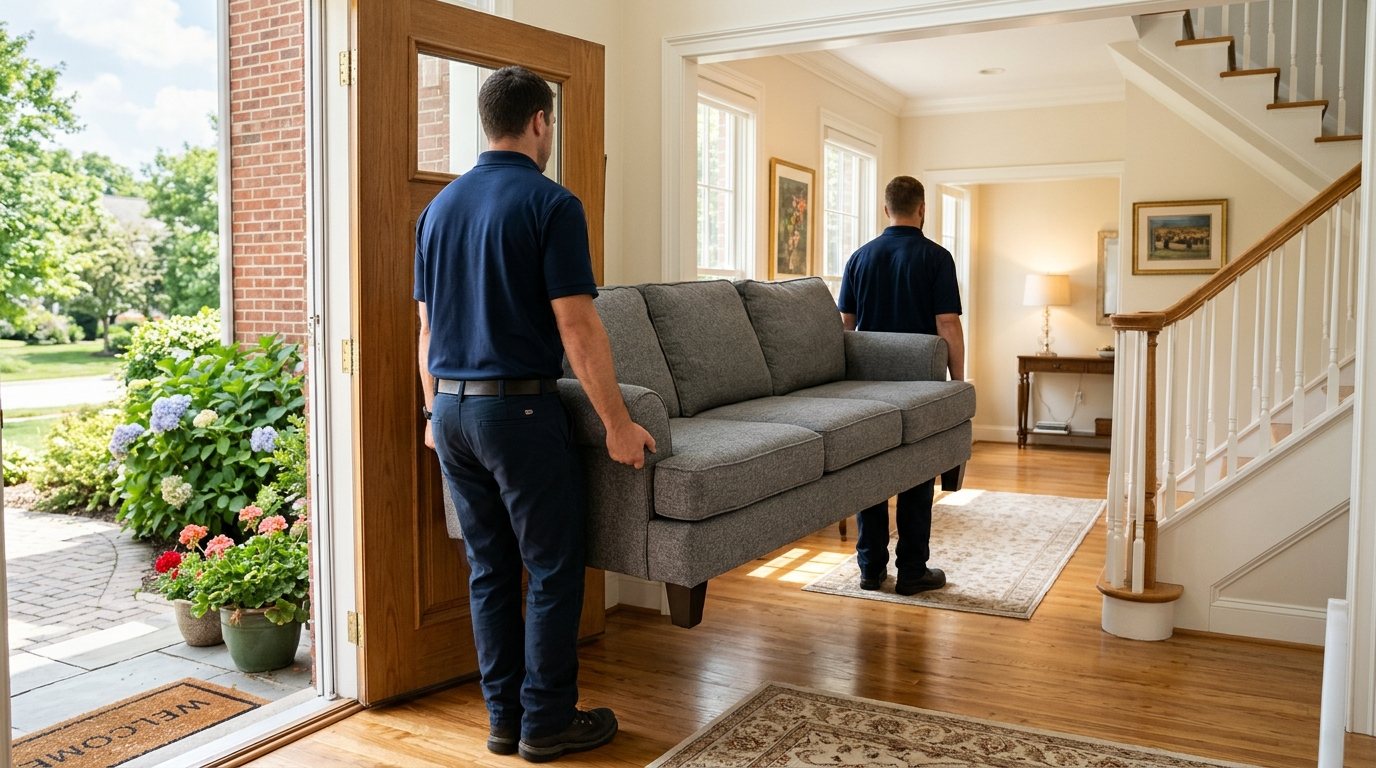
Knowing how to move a sectional sofa is the difference between a calm afternoon and a scraped door frame. The good news is that a sectional is built from sections, so most of the work is planning: separating the pieces, protecting your walls and floors, and moving each section in a safe order. This guide covers doors, stairs and condo elevators, step by step. If you are still shopping, you can browse our sectional sofas first.
Plan the Route and the Order of Moves
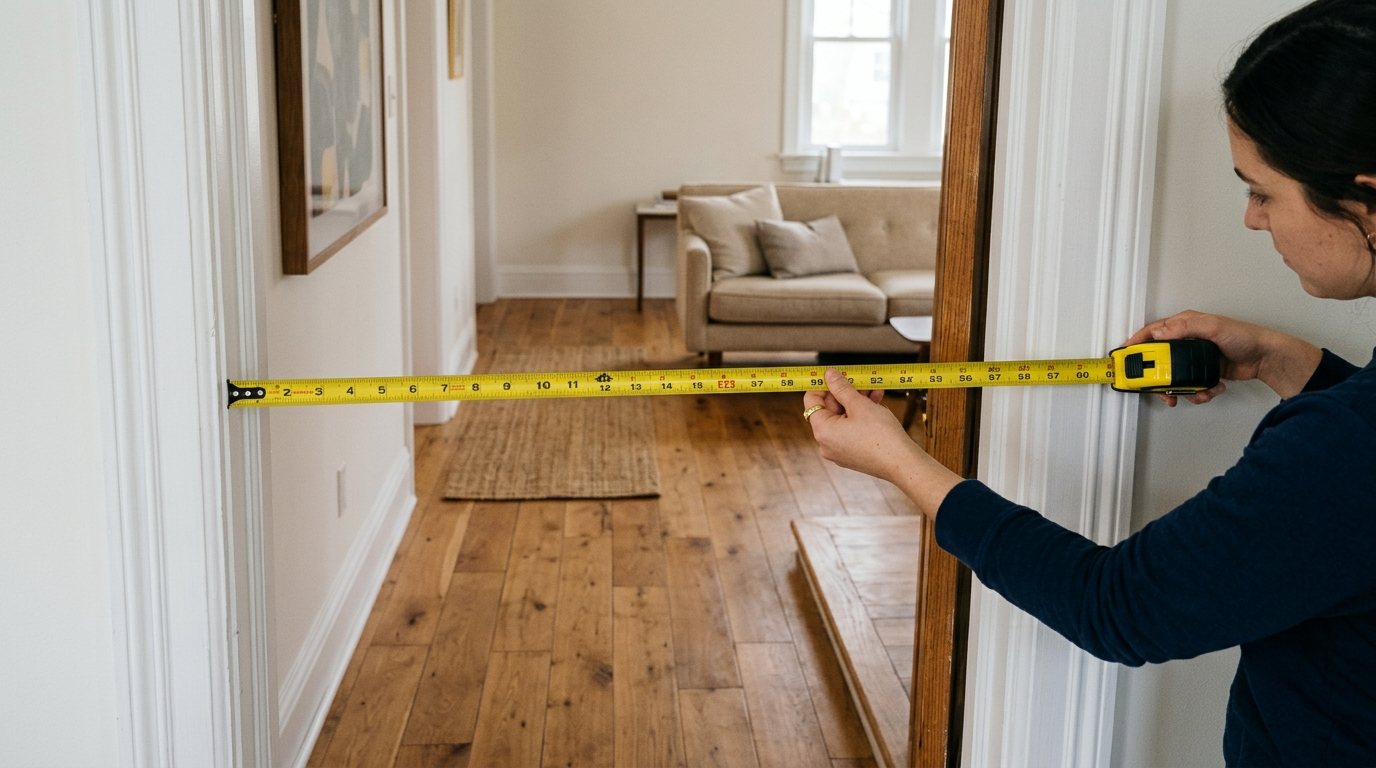
Measure each individual section, not the assembled sectional, and compare those numbers with every door, hallway, landing and elevator on the route. Our guide to measuring doors, stairs and hallways shows how. Clear the route of rugs, shoes, decor and anything else that could trip you, and make sure every helper knows the plan before the first lift.
Decide the order in which the sections will go in. A good rule is to bring in the section that sits furthest into the room first, so you are never carrying a heavy piece past one that is already in place. The same logic works in reverse when you are moving out.
Separate the Sections and Remove Loose Parts
Most sectionals join with brackets, clips, latches or hooks on the sides or underneath. Some lift and slide apart, others release with a pull tab. Check the manufacturer's instructions, take a photo of each connector before you touch it, and never force a joint. If a section will not separate, stop and look for a hidden release rather than pulling harder. You can see how sections are built by browsing our sectional pieces.
Then strip the pieces down:
- Remove loose seat and back cushions and carry them separately, ideally in large bags.
- Unscrew legs only if they are designed to come off, and keep the screws in a labelled bag taped to the section.
- Unplug and tuck away the cords on power reclining sections.
- Leave arms and backs attached unless the instructions say they are meant to detach.
Lift Safely
A single section, especially a chaise or a reclining unit, can easily weigh over 100 pounds (45 kg) and is awkward to grip. Plan on at least two people per section, and more for the largest pieces.
- Bend your knees, keep your back straight and let your legs do the lifting.
- Hold the frame or the sturdy base, not the arms, cushions or legs, which can tear or snap.
- Keep the load close to your body and move your feet instead of twisting.
- Choose one person to call the lifts, and set the piece down on the count.
- Wear closed shoes and grippy gloves, and put the section down at once if your grip slips or something hurts.
Doors, Stairs and Tight Turns
At a doorway, line the section up square to the opening before you try to pass. Stand it on its end or side, lead with the narrowest part and tilt it gently through while a helper watches the frame. If it is a tight fit, remove the door from its hinges, if it can be rehung easily, rather than scraping past it. If the piece jams, back it out and rethink instead of pushing.
On stairs, carry the section on its end or side with a spotter walking ahead. The person lower on the stairs carries more of the weight in both directions, so put the strongest person there. Go slowly, rest on landings and never walk backwards down stairs without a spotter behind you. At a turn, pivot the section around the landing in small steps and do not lift it over a railing.
Condo Elevators and Shared Spaces
Many buildings have move-in rules, so ask the property manager what applies before the day. Book the service elevator if there is one, ask how to hold it open, and stay within the posted weight limit. Check whether the building supplies wall pads or asks you to bring your own.
Move one section at a time, standing it on end only if the elevator ceiling allows. Never wedge the door with the furniture, and keep halls and fire exits clear. Allow extra time, because the best-planned elevator slot can disappear when one trip takes longer than expected.
Protect Your Walls, Then Reassemble
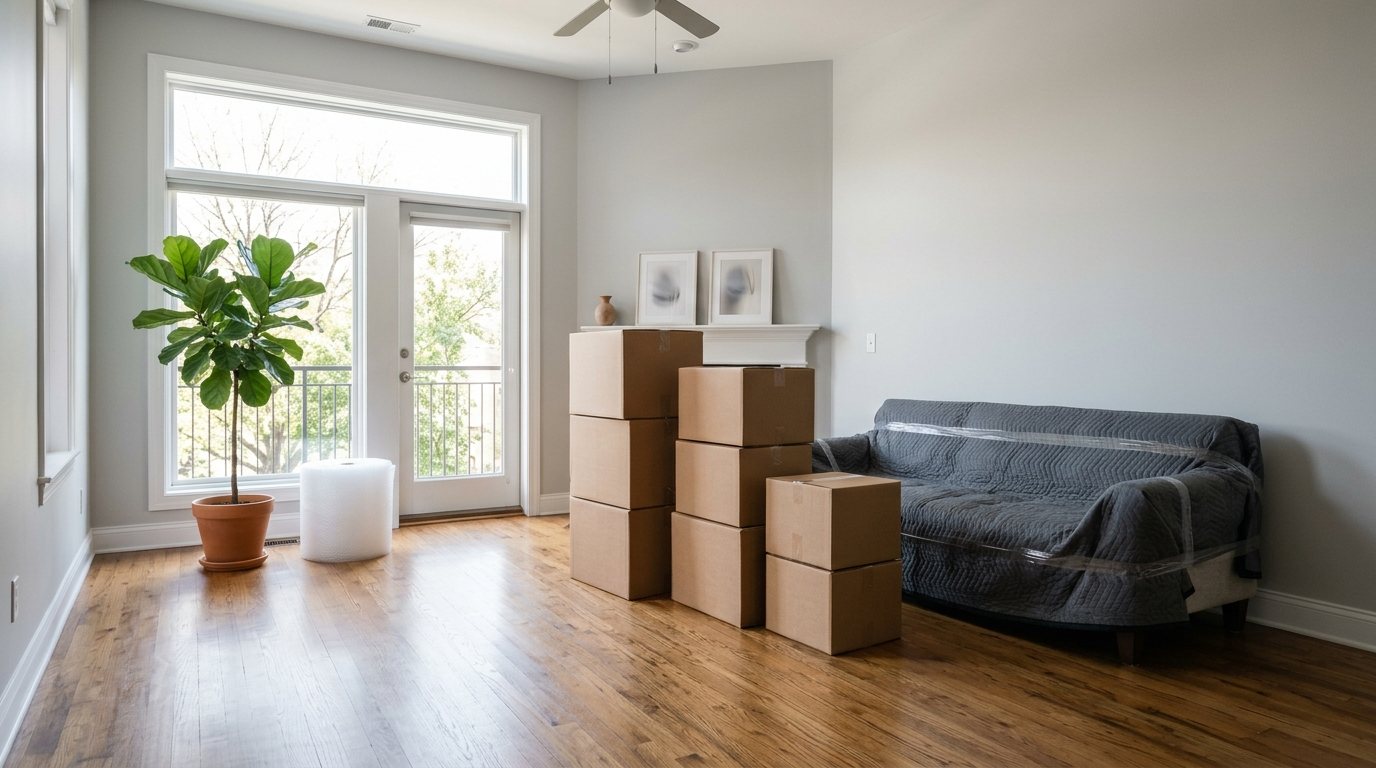
Wrap each section in moving blankets or thick cardboard, pad door frames and corners, and lay down runners or boards along the path. Our guide on protecting your floors when moving furniture has more detail.
- Bring in the anchor section first, usually the corner piece or the one against the wall.
- Line up the next section, then lift it slightly and connect the brackets or clips until they click or seat fully.
- Repeat for each section, and check that the seats are level and the gaps are even.
- Refit legs and cushions and add felt pads before you slide the sectional into its final spot.
If you are considering a sectional that can be rearranged later, our article on whether modular sofas are worth it explains the trade-offs.
When to Hire Professional Movers
Hiring professionals is the safer choice when the route has narrow or winding stairs, several flights, an elevator with strict booking rules, or sections too heavy for your helpers. Movers also bring equipment such as straps, dollies and ramps, and reputable companies carry insurance, which is worth asking about. Hire help if you are moving alone, if anyone has a back or joint concern, or if a section simply feels too heavy. A scratched wall costs far less than an injury.
Frequently Asked Questions
How do you get a sectional through a narrow door?
Separate the sectional into its sections and remove the cushions. Stand each section on its end or side, lead with the narrowest part and tilt it through slowly with a helper guiding. Taking the door off its hinges can add an inch or two. If a piece jams, back it out rather than forcing it.
Can every sectional be taken apart?
Most sectionals are made of separate sections joined by connectors, but designs vary. Some have fixed arms or backs, and a few are built as a single frame. Check the manufacturer's instructions or care information, and do not force a joint. If you are unsure, ask the retailer before you try.
How many people does it take to move a sectional?
Plan on at least two people for each section, and three or four for large chaise or power recliner sections, long stairs or tight turns. One person should call the lifts, and another can spot the route. If you cannot find enough strong helpers, hire movers.
Should I hire movers for a sectional?
It is a good idea if you have narrow or winding stairs, several flights, a strict elevator booking or heavy reclining sections. Professionals bring straps, dollies and experience at pivoting pieces around corners. Hire help any time you cannot lift safely, because injury risk matters more than saving a little time.
See the Sections in Person at Our Calgary Showroom
It is easier to plan a move when you can see how the sections join. Visit our showroom at Unit D200, 9737 Macleod Trail SW in Calgary and look at the connectors up close, or browse our sofas online and compare sizes before you commit.


Comments
Loading comments...
Leave a comment
Your email address is never shown or shared. Comments are read by our team before they appear.