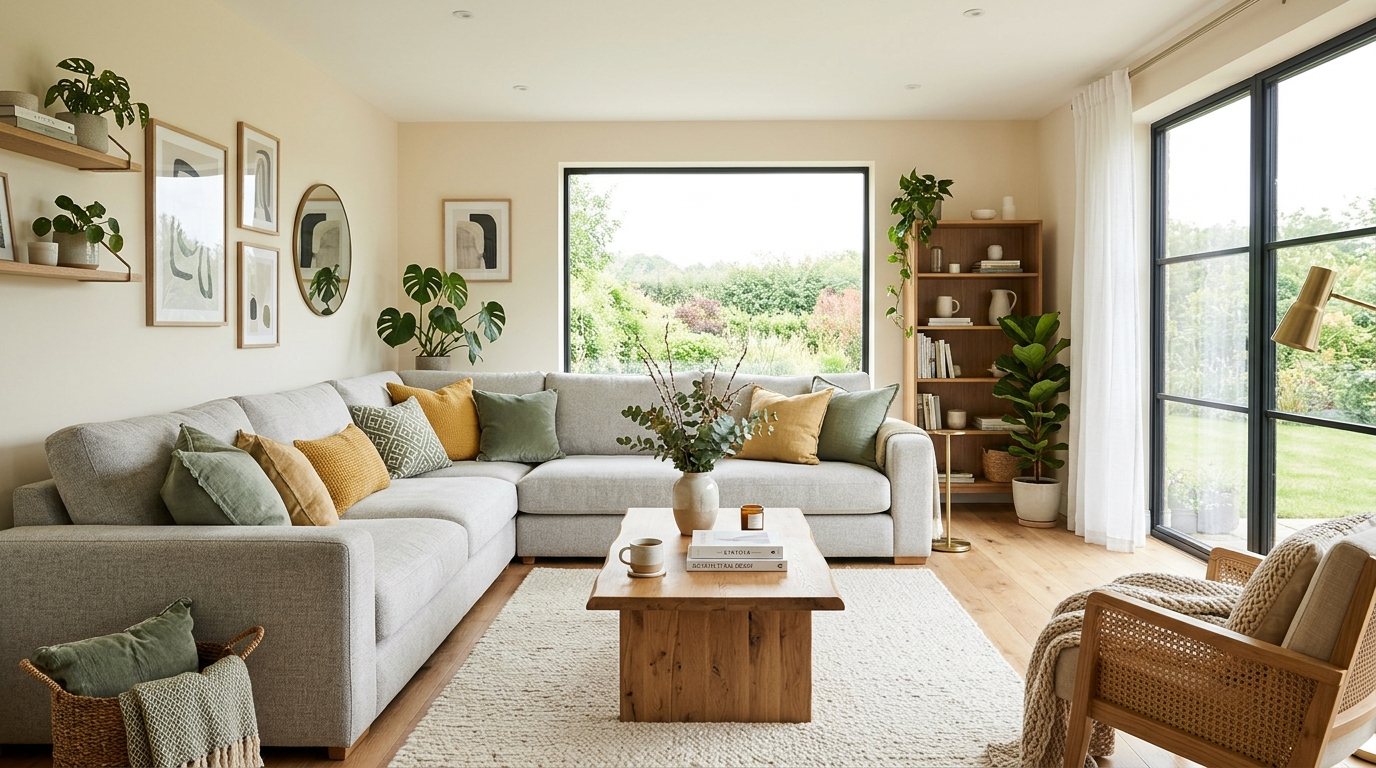
A modular sofa is built from separate sections that you can arrange, add to or rearrange as your life changes. That flexibility is the main attraction, but it comes with a few trade-offs. This practical guide explains what modular really means, the advantages and downsides, and what to check before you buy. You can see individual units in our sectional pieces.
What Modular Actually Means
Modular seating is made from freestanding units, such as armless chairs, corner pieces, left or right arm pieces, chaises and ottomans. You combine them in the layout you want. Some units lock together with clips or brackets, while others simply sit side by side.
The words modular and sectional overlap, and stores use them loosely. Many sectionals are sold as a set of pieces in a fixed arrangement, with left-facing and right-facing parts that cannot swap sides. A truly modular sofa lets you move units around. Before you buy, ask whether the pieces can be reconfigured freely or only assembled in one order.
Common arrangements include an L-shape with a chaise, a U-shape for a large room, and a straight sofa with a separate ottoman that can double as extra seating or a footrest. The same units can often be used in more than one of these layouts.
The Advantages of a Modular Sofa
- Easier delivery: smaller pieces are simpler to carry through narrow doors, tight stairwells and condo elevators than one long frame. Our guide on moving a sectional through doors, stairs and elevators shows how to plan the route.
- Reconfiguring: you can switch from an L-shape to a straight sofa, or split into two seating areas, when you rearrange or move.
- Growing the set: start with a compact arrangement and add an armless seat, an ottoman or a chaise later, if the piece is still offered.
- Easier repairs: if one unit is damaged, replacing or repairing that piece may be simpler than replacing the entire sofa.
- Fit: you can size the sofa to your room rather than choosing from a few fixed lengths.
The Downsides to Know
Flexibility has a cost, and it helps to know what to watch for.
- Seams and gaps: the joins between sections can open slightly with use, especially on smooth floors. Connectors help, and non-slip pads under the feet can reduce shifting.
- More joints: each seam is a place where cushions meet. Some people notice the lines when they sit across two units.
- Connectors can loosen: check that they can be tightened or replaced.
- Matching later: a piece added years later may not match the original fabric exactly, because dye lots vary and fabrics are sometimes discontinued.
- Cost: many individual pieces can add up, so compare the total for the full arrangement you need rather than for one unit.
Quality Checks and Questions to Ask
A modular sofa has more moving parts than a one-piece sofa, so a few checks are worth the time. Look closely at the following:
- Connectors: sturdy metal brackets or clips feel more secure than lightweight fittings. Test them if you can.
- Frame: ask what the frame is made from and how it is joined. Lift the corner of one piece. It should feel solid, not twisty.
- Seams in use: sit across a join and see how it feels, and press on the seam to check it does not shift.
- Cushions: compare seat firmness between units, because they should feel consistent.
- Availability: ask whether pieces are sold individually, and whether the style is likely to be offered again if you want to add a unit.
- Care and coverage: read the fabric care instructions and the warranty terms for each piece.
Everyday Life: Kids, Pets and Small Spaces
In a busy household, modular seating can be great or frustrating. Kids love to pull cushions and push sections apart, so use connectors where the design allows. A chaise or ottoman gives people a place to stretch out, and a durable, easy-care fabric helps with pets and spills. Ask the store about each fabric's care code before choosing a colour.
In a small space, modular pieces let you start with something that fits now. A loveseat-sized arrangement with an ottoman can grow into a larger sofa when you move to a bigger home. For more ideas on fitting seating into a compact room, read our advice on furniture for small living rooms and condos.
So, Is a Modular Sofa Worth It?
A modular sofa tends to be worth it if you move often, have narrow access, like to rearrange, or want to expand later. It is less compelling if you want one unbroken look with no visible joins, or if you will never change the layout. If you are undecided, compare it with a regular sectional in the showroom and note which feels more solid and comfortable to you.
Frequently Asked Questions
What is the difference between a modular sofa and a sectional?
A sectional is a sofa made of connected sections, often in a fixed left or right layout. A modular sofa has freestanding units you can rearrange or add to. The terms overlap, so ask the store whether the pieces can be moved into different layouts or only assembled one way.
Do modular sofas have gaps between sections?
Sometimes. Joins between units can open slightly with use, particularly on smooth floors. Connectors and non-slip pads reduce the movement. Sit across a seam in the showroom, check how the connectors work, and look at how the cushions meet before you buy.
Can I add pieces to a modular sofa later?
Often you can, if the manufacturer still makes the piece, but there is no guarantee. Fabrics and styles are sometimes discontinued, and dye lots can vary. Ask the store whether the pieces are sold individually and consider buying any extra unit you expect to need up front.
Are modular sofas good for small spaces?
They can be. You can choose exactly the pieces that fit, add an ottoman for flexible seating, and move the sections more easily through narrow doors. Measure the room and walkways first, and plan a layout that leaves a clear path through the space.
Try a Layout in Person
The best way to judge a seam, a connector or a seat depth is to sit on the pieces. Visit our showroom at Unit D200, 9737 Macleod Trail SW in Calgary to try different arrangements, or browse our sectionals and sofas online before you come. Bring your room measurements and a sketch of the space.



Comments
Loading comments...
Leave a comment
Your email address is never shown or shared. Comments are read by our team before they appear.