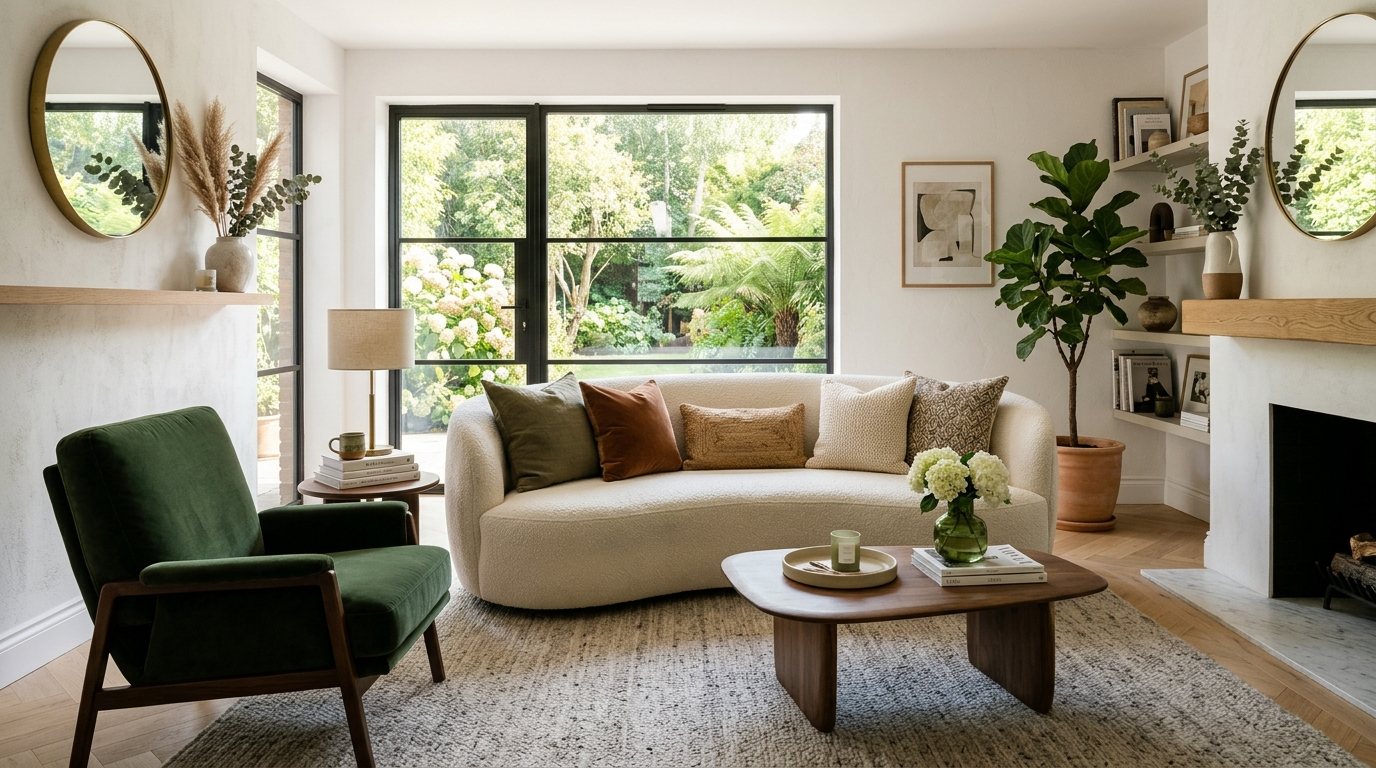
Curved sofas and rounded furniture are moving from design magazines into everyday living rooms. If you are thinking about a curved sofa, this guide explains why the shape is popular, where it fits best, where it can be tricky, and how to pair it with a coffee table, rug and lighting. You can compare shapes and sizes in our sofas as you read.
Why Curves Are Popular Right Now
Designers and retailers have been pointing to softer, rounder shapes for the past couple of years. The appeal is easy to see. Most rooms are full of straight lines, from walls and windows to TV stands and bookcases, and a curve breaks up all those edges. Curved seating also feels social, because it turns people slightly toward each other, which suits conversation more than a long, flat sofa does.
Treat it as a direction, not a rule. A curved piece should earn its place by fitting the room and feeling good to sit on, not just by looking current.
Types of Curved and Rounded Seating
- Curved sofa: a gentle arc across the back and front, usually seating three or four.
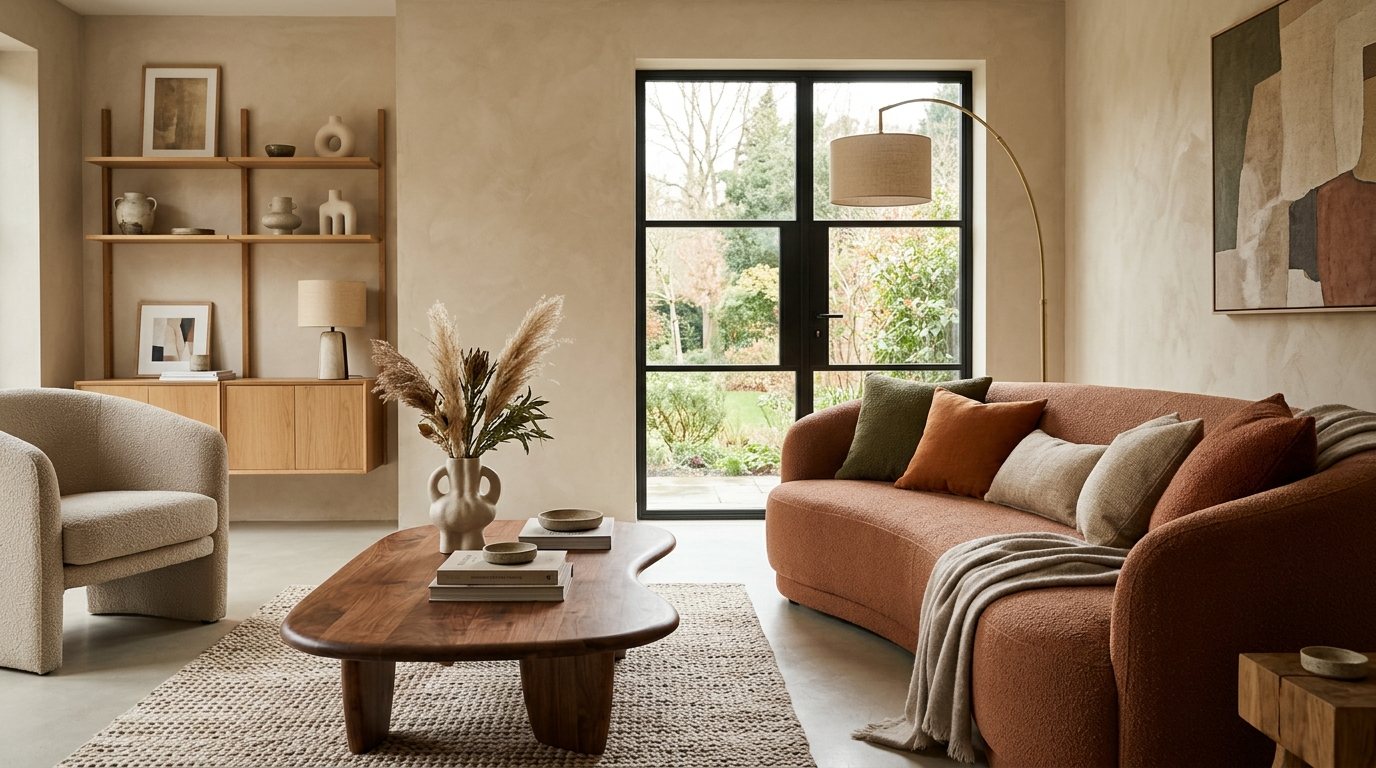
- Kidney-shaped sofa: a deeper, more pronounced bean-like curve that works as a centrepiece.
- Curved sectional: several sections that sweep around a corner. Browse our sectionals to compare layouts.
- Rounded-arm sofas and loveseats: the frame stays straight, but soft, rolled or scooped arms give the same gentle feel with a smaller footprint.
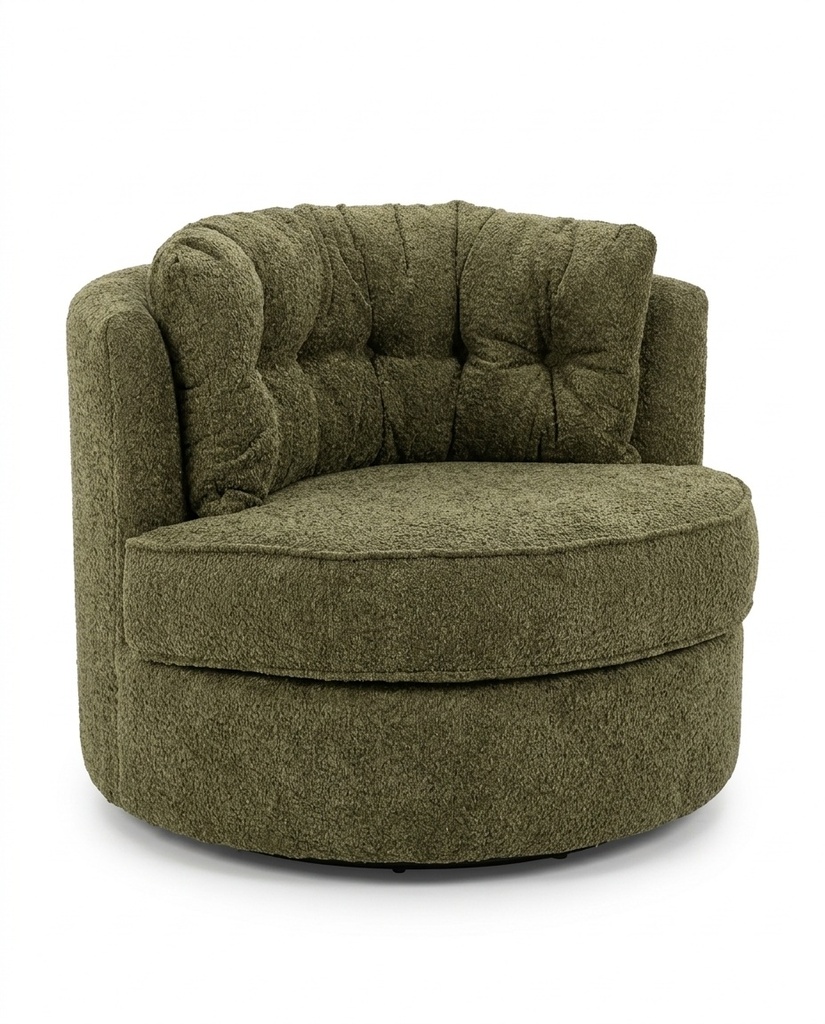
- Barrel and round chairs: one small step into the trend. See the range of accent chairs for rounded backs and swivel bases.
Where Curved Sofas Work Best
Open rooms give curves the space they need. A curved sofa can float in the middle of a living and dining area to define the seating zone, with its back to the room and its curve facing a fireplace, a window or a TV wall. Large bay windows and rounded corners also suit the shape, since the sofa can follow the line of the architecture.
A small rounded piece, such as a loveseat or armless chair, can tuck into a corner that a rectangular piece would block. If you have a long, narrow room, a single curved sofa in the middle of the space can help soften the proportions.
Where Curves Get Tricky
Curved furniture is less forgiving with flat surfaces. Here are the main things to check before you buy:
- Flat walls: the curve leaves a wedge-shaped gap behind the sofa. You can fill it with a plant, a floor lamp or a slim console, but it will not sit flush.
- Depth: the overall depth at the deepest point is often much greater than the width suggests. Mark the shape on the floor with painter's tape or cardboard.
- Walkways: keep about 30 to 36 inches (76 to 91 cm) clear around the sofa so traffic can pass without squeezing.
- Delivery: a sweeping frame can be harder to turn through tight doors, stairwells and elevators. Measure every opening and corner on the route, and ask for the exact dimensions of the sofa.
- TV viewing: the ends of a curve face inward, not at a flat screen, so check sight lines from each seat.
Pair It With Round Tables, Rugs and Lighting
A round or oval coffee table follows the curve and avoids sharp corners in the walking path. Leave roughly 14 to 18 inches (36 to 46 cm) between the sofa edge and the table, which is a common guideline for easy reach. Our guide to choosing a coffee table size, shape and height covers the details.
For the rug, a round or oval shape looks natural under a curved sofa, but a rectangular rug can work too, as long as at least the front legs of the sofa sit on it. An arched floor lamp behind one end, a round mirror on the wall and a pair of small round side tables continue the theme. Avoid making everything round, though. A few straight lines, such as a bookcase or a rectangular rug, keep the room balanced.
Check Comfort Before You Commit
Sit in the middle and at each end. On a tight curve, the end seats can angle inward, which is great for chatting but less comfortable for stretching out. If you like to lounge, look for a gentler curve, a deeper seat or a sectional with a chaise. Note the seat depth, the angle of the back and the firmness of the cushions, then see whether you can sit comfortably for ten minutes.
For more ideas on how this shape fits with other directions in the market, read our overview of living room furniture trends for 2026.
Frequently Asked Questions
Are curved sofas a passing trend?
Nobody can say for sure. Designers and retailers are highlighting rounded shapes in 2025 and 2026, but curved furniture has appeared in many design eras. If the shape fits your room and feels comfortable, it is a reasonable choice, and a gentle curve in a neutral colour is a lower-risk way to try it.
Can a curved sofa go against a wall?
It can, but it will not sit flush. The back curves away from a flat wall and leaves a wedge-shaped gap. Many people fill the gap with a plant or lamp, or float the sofa in the room instead. A sofa with a gentler curve leaves a smaller gap.
What coffee table goes best with a curved sofa?
A round or oval coffee table usually follows the curve naturally and has no sharp corners in the walkway. A rectangular table can still work when the curve is gentle. Keep about 14 to 18 inches (36 to 46 cm) between the table and the sofa.
Are curved sofas comfortable?
They can be, but comfort depends on seat depth, cushions and how tight the curve is. The middle seats are usually the most relaxed, while end seats on a strong curve angle inward. Sit on several positions in person and check how it suits your usual way of lounging.
See the Shapes in Person
A curve is much easier to judge in a real room than in a photo. Visit our showroom at Unit D200, 9737 Macleod Trail SW in Calgary to walk around the pieces, sit in different seats and check the depth against your measurements. Bring your room dimensions and a photo of your space if that helps you plan, and browse our coffee tables online to find a round or oval match.
Comments
Loading comments...
Leave a comment
Your email address is never shown or shared. Comments are read by our team before they appear.