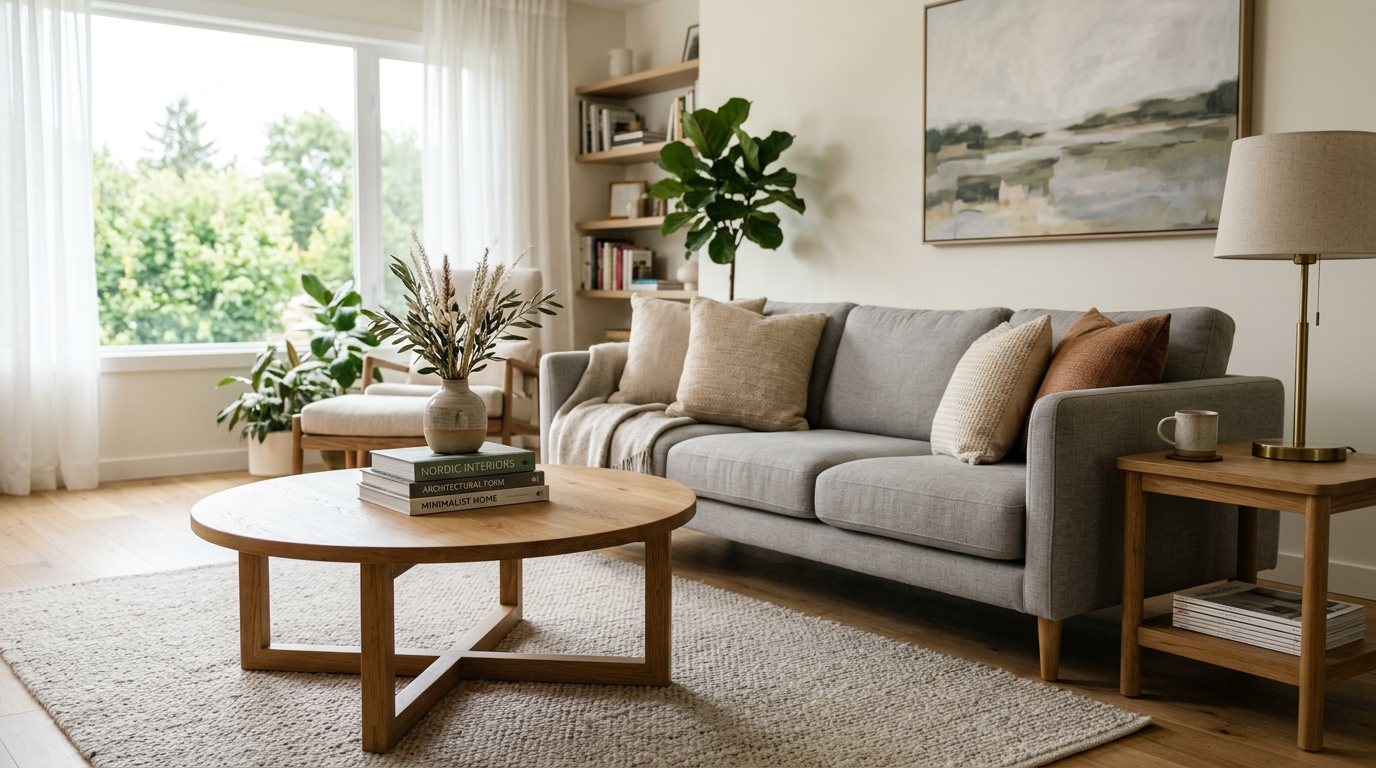
A coffee table holds drinks, books, remotes and the odd laptop, and it pulls the whole seating area together. This guide shows you how to choose a coffee table that suits your sofa, your room and your daily habits, with simple rules for size, height and shape that you can check with a tape measure. When you are ready to compare styles, browse our coffee tables with your numbers in hand.
Size and Height Rules to Measure First
Three measurements decide whether a coffee table feels right. Take them before you look at finishes.
- Height: the tabletop should sit level with the sofa seat or one to two inches (2.5 to 5 cm) lower. Most sofa seats are about 17 to 20 inches (43 to 51 cm) off the floor, so many coffee tables fall between 16 and 20 inches (41 to 51 cm). A table higher than the seat feels like a barrier.
- Length: aim for about one half to two thirds of the sofa's length. An 84-inch (213 cm) sofa pairs well with a table roughly 42 to 56 inches (107 to 142 cm) long.
- Gap to the sofa: leave 16 to 18 inches (41 to 46 cm) between the sofa and the table. That keeps knees comfortable and a cup within reach. In a tight room you can go down to about 14 inches (36 cm), but less than that makes standing up awkward.
Keep 30 to 36 inches (76 to 91 cm) clear on the sides where people walk. If you have a rug, place the table so all four legs sit on it rather than straddling the edge.
Choosing the Shape: Rectangle, Round or Oval
Shape changes how the room moves, so match it to your layout and traffic.
- Rectangular: echoes the line of the sofa, offers the most usable surface and suits long, narrow living rooms.
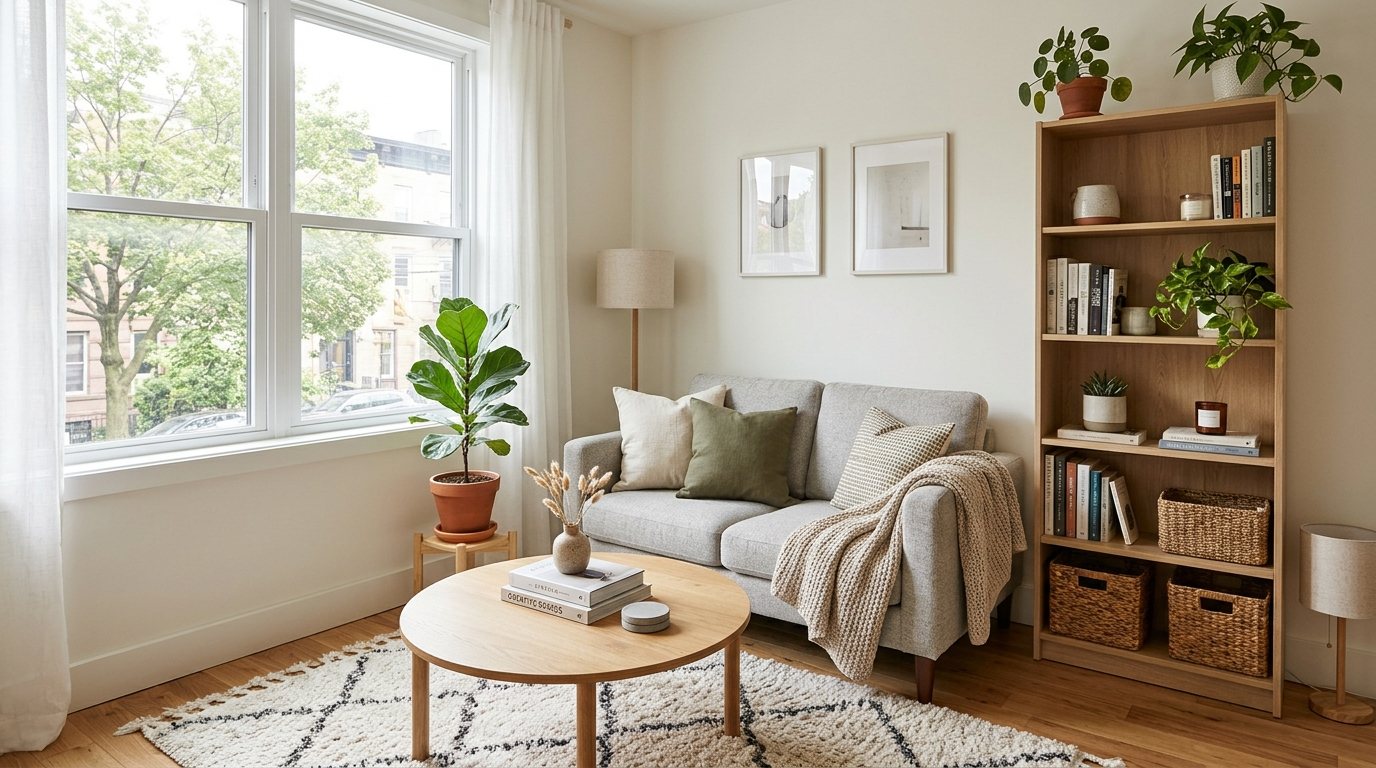
- Round: removes corners from the walkway, which helps in small rooms and in homes with young children. It works well when seating sits on several sides, such as a sofa with two chairs. A diameter of 30 to 42 inches (76 to 107 cm) suits most living rooms.
- Oval: gives you the length of a rectangle with softer ends, a good middle path for a mid-size sofa.
- Square: sits nicely in front of a pair of chairs or in the open corner of a sectional.
In a small room, a table with slim, open legs lets you see the floor underneath, which makes the space feel larger. With a sectional, centre the table on the open side of the seating, or use two smaller tables that can move apart so the chaise stays easy to reach.
If you are still working out where everything goes, our guide to living room furniture layouts that work shows how seating and tables share the floor.
Storage, Lift Tops and Nesting Tables
Think about what ends up on your table now, then pick storage to match. A coffee table with storage can take the clutter of remotes, coasters, magazines and kids' games off the surface.
- Lower shelf: the simplest option. A basket on the shelf hides throws or toys and keeps the top clear.
- Drawers: good for small items, as long as they glide smoothly and stay closed.
- Lift-top: the top rises toward you for a laptop or a snack and opens a compartment below. Test the lifting action and make sure the top stays where you set it.
- Nesting tables: two or three tables that slide together when space is tight and spread out when guests arrive.
If you like a coordinated look, an occasional table set pairs a coffee table with matching end tables. Our article on choosing and placing end tables covers the other half of the arrangement.
Materials That Match Your Household
Every material has a trade-off, and the best one depends on who uses the room.
- Wood: warm and sturdy. Use coasters and wipe spills quickly, and follow the maker's care guidance for the finish.
- Glass: lets light through and keeps a small room feeling open, but shows fingerprints and dust.
- Metal: a strong frame that suits modern and industrial rooms, often combined with a wood or glass top.
- Stone or stone-look tops: solid and cool to the touch. Natural stone can stain or etch, so ask about its care before you buy.
With toddlers, many families prefer rounded corners and a sturdy top. With pets, a durable finish and a table that is hard to tip matter more than delicate details.
How to Decide in Five Steps
- Measure your sofa's length and the height of its seat.
- Mark the table's footprint on the floor with painter's tape and walk around it for a day.
- Check the 16 to 18 inch gap to the sofa and the 30 to 36 inch walkway.
- Choose the shape that gives you the freest path through the room.
- Choose storage and material for how your household really lives.
The tape trick is worth the five minutes. It shows you in real life whether a table crowds the room before you commit.
Frequently Asked Questions
What size coffee table should I get for my sofa?
Choose a table about one half to two thirds as long as the sofa, with a top level with the seat or slightly lower. For a typical 84-inch sofa, that is roughly 42 to 56 inches long. Leave 16 to 18 inches between the two so legs and drinks have room.
How high should a coffee table be?
Most coffee tables sit between 16 and 20 inches high. The best match is a top at the same height as your sofa seat or an inch or two below it. Taller tables can feel like a wall, and very low ones make reaching for a drink uncomfortable.
Are round coffee tables better than rectangular ones?
Neither is better for every room. Round tables suit small spaces, busy walkways and layouts with seating on several sides. Rectangular tables echo a sofa, give more surface and suit long rooms. Pick the one that leaves the clearest path around it.
Does a coffee table have to match the end tables?
No. Matching sets look tidy, but mixed pieces can look relaxed and intentional if they share a colour, wood tone or metal finish. Keep the end tables close to the sofa arm in height, and let the coffee table be the larger, lower piece.
See It in Person
Numbers get you most of the way, but sitting beside a table is the best test. Visit our showroom at Unit D200, 9737 Macleod Trail SW in Calgary to compare heights and finishes next to real sofas, or browse the living room collection online to plan the whole room.


Comments
Loading comments...
Leave a comment
Your email address is never shown or shared. Comments are read by our team before they appear.