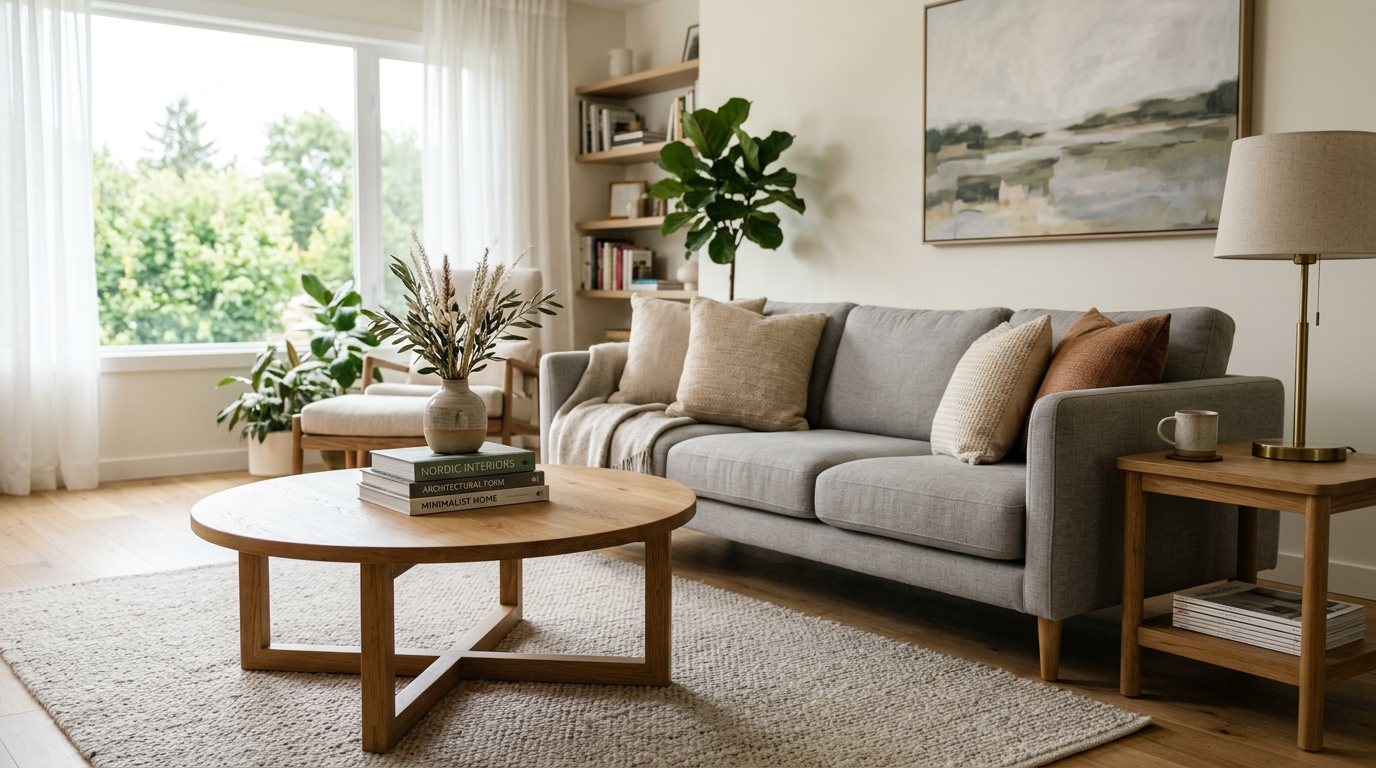
An end table is a small piece that does a lot of daily work: it holds a lamp, a drink, the remote and whatever else you want within arm's reach. This guide explains how to choose an end table, from height and size to storage, materials and placement. If you are ready to look at options, you can browse our end tables while you read.
End Table, Side Table or Accent Table?
The names overlap, and most stores use them loosely. In general, an end table sits at the end of a sofa or beside a chair, a side table can go almost anywhere, and an accent table leans toward decoration, such as a small round table with a plant on top. What matters is the job you want the table to do, so start there rather than with the label.
Ask yourself three questions. Will it hold a lamp? Do you need storage? Will people set drinks on it every day? The answers decide the size, the top surface and whether you want a drawer or shelf.
Get the Height Right
Height is the detail that makes a table feel natural or awkward. The common rule of thumb is to choose a top that sits at the height of the sofa arm, or within about 2 inches (5 cm) above or below it. Many sofa arms fall between 24 and 28 inches (61 to 71 cm), so tables in that range are the easiest to match.
- Slightly lower than the arm works well and feels relaxed, especially beside a low-profile sofa.
- Slightly taller than the arm suits a lamp, since that lifts the shade closer to reading height.
- Much taller or much lower usually looks off and makes it hard to reach a drink without leaning.
Measure your sofa arm before you shop, then sit down and hold a mug at the table's height. If you are choosing for a recliner or a deep sectional, test the reach from the seat as well. If the table feels far away when you are leaning back, move it closer or pick a smaller one.
Size and Shape
Most end tables measure roughly 18 to 24 inches (46 to 61 cm) across, which leaves room for a lamp and a coaster. In a tight room, a narrow table of 12 to 16 inches (30 to 41 cm) still holds a drink and a phone. Keep the table in proportion with the furniture beside it: a very small table beside a large sectional can look lost.
- Round tables have no corners to bump and suit walkways, corners and homes with small children.
- Square and rectangular tables line up neatly with straight sofa arms and offer more usable surface.
- Nesting tables give you extra surfaces when guests come and tuck away when they leave.
- C-shaped tables slide partly over a sofa seat or beside a bed so a laptop or tray sits right where you need it.
If you have a round coffee table, a round end table repeats the shape. Our guide to choosing a coffee table size, shape and height shows how the two pieces work together.
Pairs, Singles and Mixed Placement
A matching pair on either side of a sofa gives a calm, balanced look, and it works well on a centred wall. You do not have to match them exactly. Two different tables of similar height, finish or visual weight can look more collected, as long as one is not clearly larger than the other.
In a room where the sofa sits against a window or a door, use a single table on the open side and put a floor lamp or a plant on the other. Beside an accent chair, a small round table is usually enough. In a sectional, a corner table or an end table next to the chaise saves you from crossing the room for a drink. For more on how the pieces fit together in the room, see our guide to living room furniture layouts that work.
Storage, Charging and Practical Features
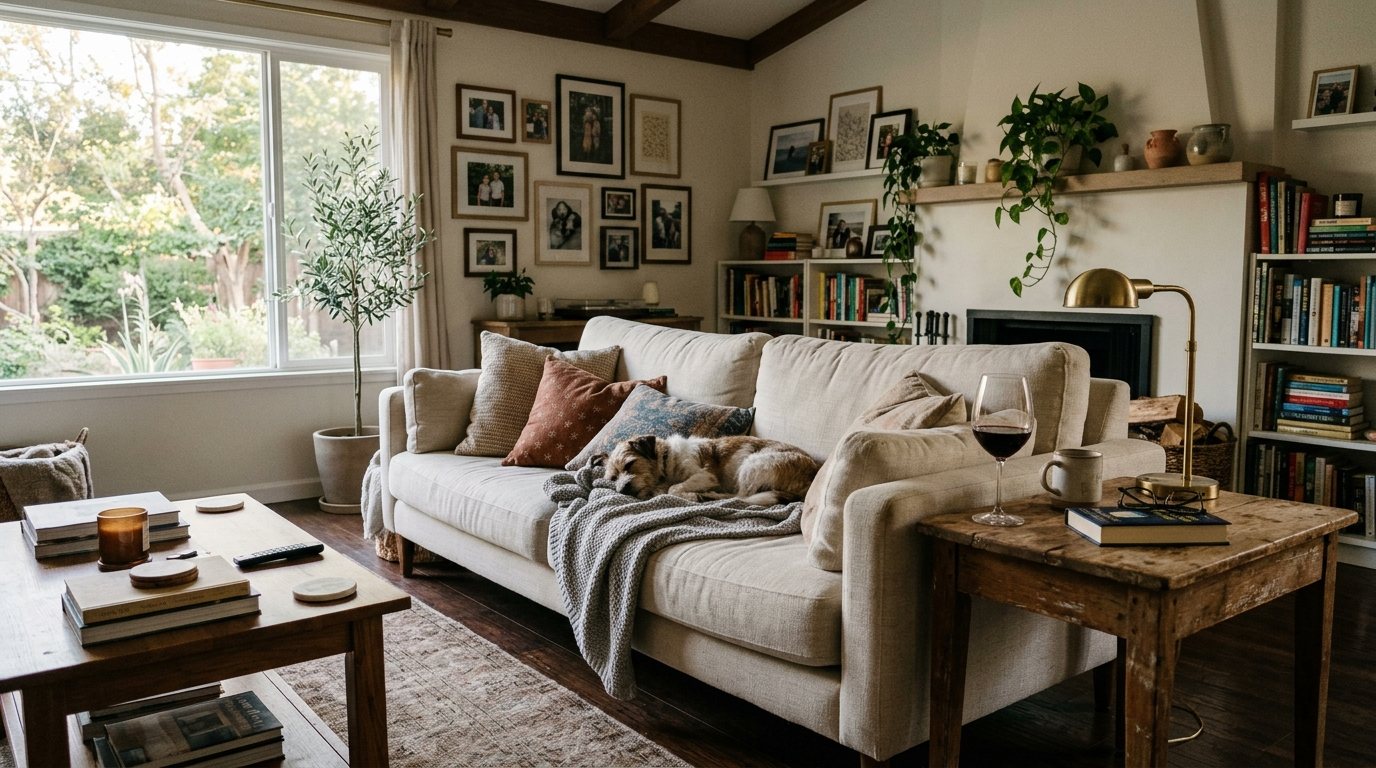
Think about what ends up on the table. A drawer hides remotes and chargers, an open shelf holds a basket for throws or magazines, and a closed cabinet suits a household with curious pets or kids. If the table will hold a lamp, leave enough surface for the base and still keep space for a cup.
Power is easy to forget. Some tables have built-in charging, and many do not, so check the product details. If yours does not, choose a spot near an outlet and use a small cord clip so the lamp or phone cable does not trail across the floor.
Materials and Everyday Care
- Solid and veneer wood: warm and classic. Use coasters, and wipe spills quickly.
- Glass tops: bright and light-looking, although they show fingerprints and need a soft cloth to keep clear.
- Metal frames: slim and sturdy, a good choice when you want an airy look in a small room.
- Stone-look and heavy tops: stable, which helps with lamps, but heavier to move when you rearrange.
Check the manufacturer's care instructions for the finish, and wipe up water rings and spills promptly, because standing moisture marks many finishes. In homes with pets or young children, favour a stable base and rounded corners over a tall, narrow table that tips easily.
Frequently Asked Questions
What height should an end table be?
A good guideline is to match the top to the sofa arm, within about 2 inches (5 cm) either way. Many sofa arms are 24 to 28 inches (61 to 71 cm) tall, so tables in that range work in most rooms. Measure your own sofa and sit down to test the reach.
How big should an end table be?
Most end tables are about 18 to 24 inches (46 to 61 cm) wide, which suits a lamp and a drink. In tight rooms, a narrow table of 12 to 16 inches (30 to 41 cm) still works. Keep it in proportion with the sofa or chair beside it.
Do end tables have to match?
No. A matching pair looks balanced, but two different tables can look just as good when they share a similar height, finish or visual weight. Avoid pairing a very large table with a very small one, because the imbalance is noticeable.
Do I need an end table on both sides of the sofa?
No. Two tables look symmetrical, but a single table with a floor lamp or plant on the other side works well, especially in smaller rooms or when a sofa sits against a wall or window. Place one table where people sit most often.
See Them in Person Beside a Sofa
The easiest way to judge height and size is to see a table next to a real sofa arm. Visit our showroom at Unit D200, 9737 Macleod Trail SW in Calgary to compare options, or browse our occasional table sets and the full living room collection online first.
Comments
Loading comments...
Leave a comment
Your email address is never shown or shared. Comments are read by our team before they appear.