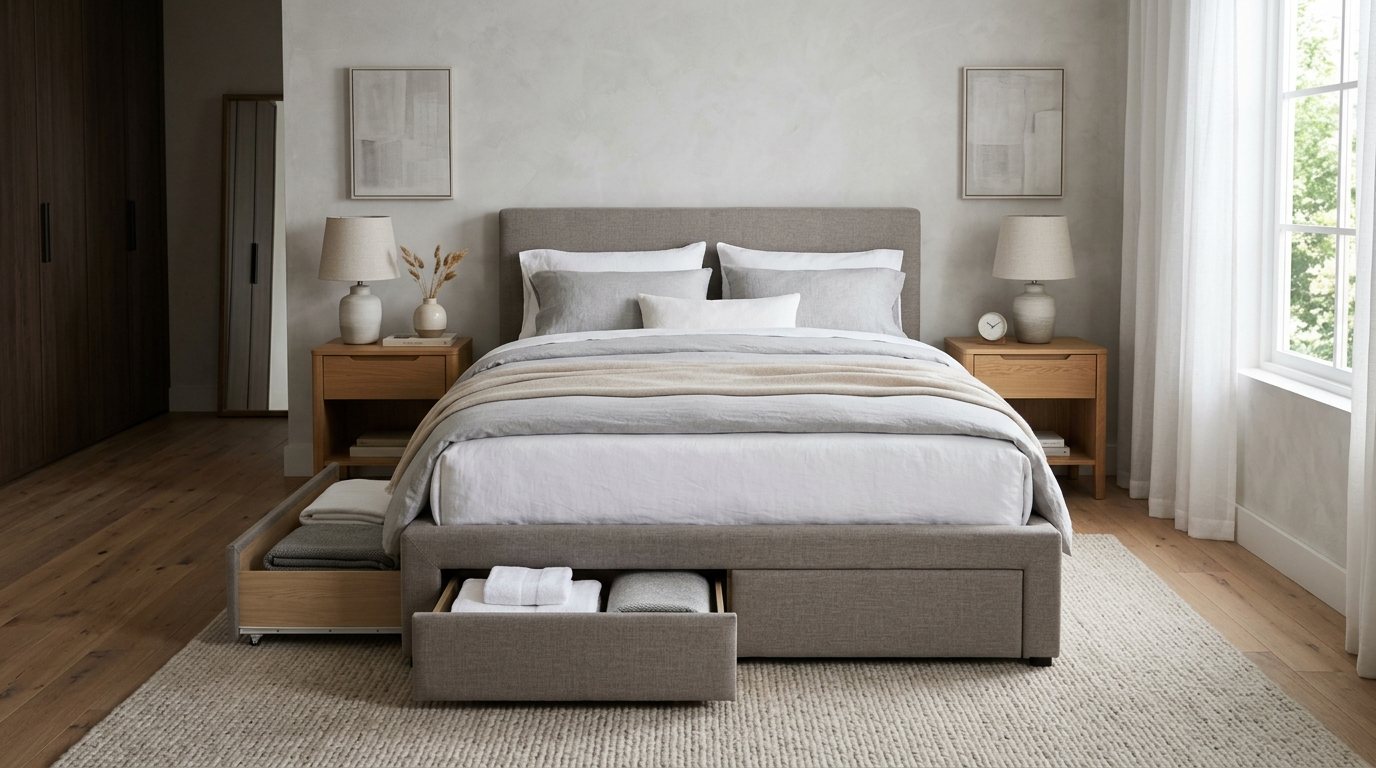
A nightstand is a small piece with a big job: it keeps your lamp, phone, water and book within reach of the bed. This guide shows you how to choose a nightstand by height, width and storage, and how to plan for charging, lighting and small bedrooms. Browse our nightstands once you have measured your bed and the wall space beside it.
Start With Height
The simplest rule is to match the top of the nightstand to the top of the mattress, or to land within about 2 inches (5 cm) either way. Measure from the floor to the top of your mattress. Many beds fall between about 24 and 30 inches (61 to 76 cm), and most nightstands run from about 22 to 30 inches (56 to 76 cm).
A nightstand that is much lower than the mattress means reaching down for your phone, and one that towers over the bed looks out of proportion. Slightly higher is usually easier to live with than lower. For a low platform bed, look for a shorter nightstand or a floating shelf set at mattress height.
Width, Depth and Spacing
Most nightstands are 18 to 30 inches (46 to 76 cm) wide, and the larger the bed, the wider the table can be before it looks lost. As a guideline, a queen bed often looks balanced with nightstands of about 20 to 26 inches (51 to 66 cm), while a king can carry 24 to 30 inches (61 to 76 cm). Depth is commonly 14 to 18 inches (36 to 46 cm), and a shallower table helps when the walkway is tight.
- Leave a gap of an inch or two (2.5 to 5 cm) between the bed and the table so bedding hangs freely and the frame does not scrape.
- Measure the wall on each side of the bed, and allow for doors, closets and radiators that sit nearby.
- Keep the top surface big enough for a lamp base plus the things you reach for at night.
Our comparison of king vs queen beds includes the wall widths that suit each size, which helps you see how much space is left for nightstands.
Drawers, Shelves or Both
Make a short list of what you keep beside the bed: phone, charger, glasses, a book, hand cream, tissues, a remote. That list points to the right storage style.
- Nightstand with drawers: hides clutter and keeps the top clear. One drawer is plenty for chargers and small items, and a soft-close drawer is quieter in a shared room.
- Open shelves: quick to reach and good for books or a basket, though everything on them is visible.
- Doors: closed storage for larger things such as a spare blanket or a stack of magazines.
- A mix: a drawer above an open shelf is a popular balance of tidy and easy to reach.
If you are furnishing the whole room, nightstands often come in a set with the bed and dresser, which our guide to choosing a bedroom set explains.
Plan for Outlets, Charging and Lamps
Find the nearest outlet before you choose, then think about how the cord will reach. Look for a back panel with a cord opening, or a nightstand with built-in outlets or USB ports. If you add a power strip, choose a surge-protected one, keep it clear of bedding and follow the manufacturer's directions.
For lighting, pick a lamp whose shade bottom sits around eye level when you sit up in bed, so the bulb does not shine into your eyes. Wall sconces or plug-in wall lights free up the tabletop completely, which is a useful trick on a narrow nightstand.
Pairs, Mismatched Tables and Small Rooms
A matching pair is the easiest way to get a balanced look. If you prefer a mismatched pair, keep the two within about 2 inches (5 cm) in height and give them a similar visual weight. A shared finish, hardware or lamp style ties them together. Mismatched tables also help when one side needs more storage than the other, or when a door or window limits the space.
In small bedrooms, these options save floor space:
- A narrow table, around 12 to 16 inches (30 to 41 cm) wide, still holds a lamp and a phone.
- A floating nightstand mounted on the wall keeps the floor clear and makes the room feel larger. Mount it into studs or with suitable anchors, and check its weight limit in the maker's instructions.
- One nightstand only, if one side of the bed sits against a wall.
- A stool or small table used as a simple bedside surface.
A Quick Checklist
- Measure from the floor to the top of the mattress.
- Measure the usable wall space on each side of the bed.
- List what you keep within reach.
- Locate the outlet and check how the cord will run.
- Decide between a matching pair and a mismatched look.
- Tape the footprint beside the bed to check the walkway.
Frequently Asked Questions
How tall should a nightstand be?
Aim for a top that is level with your mattress or within about 2 inches above or below it. Many beds measure between 24 and 30 inches from the floor to the mattress top, so measure yours first. Slightly higher is usually easier to reach than lower.
How wide should a nightstand be for a queen bed?
As a guideline, about 20 to 26 inches wide looks balanced beside a queen bed, while a king bed can take wider tables. Measure the wall space on each side of the bed first, and leave a small gap so the table does not scrape the frame.
Do nightstands have to match?
No. A matching pair looks balanced, but mismatched tables can look deliberate if they are about the same height and visual weight and share a finish or hardware. Mixed tables also help when one side needs more storage or a door limits the space.
Are floating nightstands a good idea?
They suit small bedrooms because they free the floor and look light. They need secure mounting into studs or with anchors suited to your wall, and the weight limit in the maker's instructions matters. Check what you plan to keep on top before you choose one.
Check the Fit in Person
Bring the height of your mattress and the width of your bedside wall to our showroom at Unit D200, 9737 Macleod Trail SW in Calgary, and see how different nightstands sit next to a real bed. You can also browse our beds and the wider bedroom collection online to plan the whole room.


Comments
Loading comments...
Leave a comment
Your email address is never shown or shared. Comments are read by our team before they appear.